For eighteen years, I believed the kindest thing I could do for my daughter was keep her sister’s name out of her life.
Then, on her eighteenth birthday, my husband carried a wooden chest out of the garage and set it in front of her.
“There’s something we should have told you a long time ago,” he said.
I looked at the birthday candles melting into the cake and the car keys still clutched in Hannah’s hand. A few minutes earlier, she had been laughing.
“David,” I whispered. “Please.”
For the first time, he didn’t let my fear end the conversation.
The Baby We Brought Home
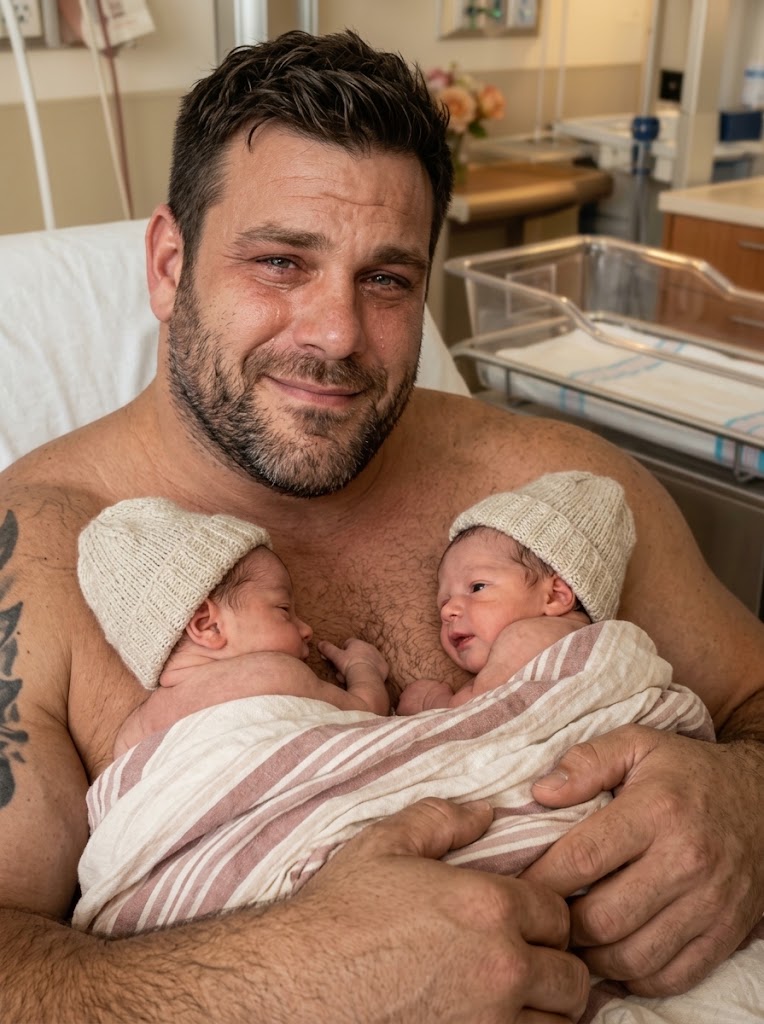
Rosie arrived eleven minutes after Hannah.
Six pounds, one ounce. A soft cap of dark hair. A tiny fold of skin beside her left eye that appeared whenever her face crumpled before a cry.
Those are the things I remember without trying. Eighteen years later, I sometimes forget why I’ve walked into a room, but I can still picture that crease.
Hannah announced every need at full volume. Rosie usually gave us a little warning, a restless wiggle or a quiet sound from the bassinet. During those first days at home, I joked that Hannah was handling the complaints for both of them.
David and I were twenty-seven. We were exhausted, delighted, and forever losing track of which baby had been fed. We kept notes on the kitchen counter and laughed at ourselves for needing written instructions to get through an afternoon.
We thought we were learning how to be parents to two girls.
Nine days after we brought them home, Rosie died.
Eventually, the coroner’s report gave us a term: sudden infant death syndrome. SIDS.
I read those letters until they stopped looking like letters. They identified what had happened, but they couldn’t answer the question I kept asking in the dark.
How could my daughter have been here, warm and breathing, and then be gone?
People kept assuring us we hadn’t done anything wrong. I understood they were trying to help. Still, I searched every memory for something I could have changed. A mistake would have given my mind somewhere to land. Instead, I kept going back over the same hours, finding nothing that would bring her back.
While David was at the funeral home, I dismantled Rosie’s crib.
I remember dropping a screw and crawling across the carpet to find it. Such a small, ordinary task. I concentrated on it fiercely because I couldn’t bear to look at the empty mattress.
When David returned, the crib pieces were stacked in the garage.
He stopped in the doorway.
“You took it down?”
“I couldn’t leave it there.”
He stood still for a moment, then nodded. I was relieved he didn’t argue. It took me years to wonder whether he had needed to see it one more time.
Hannah still needed bottles, clean diapers, and someone to pick her up at two in the morning. I held her against my chest and watched her breathe. Sometimes relief washed over me so powerfully that I felt ashamed of it.
Then I’d feel ashamed for crying while the baby in my arms was looking up at me.
David would find us in the rocking chair and offer to take a turn. Sometimes I let him. Sometimes I held her tighter.
We loved each other. We loved both our daughters. But we had no idea how to speak about what had happened without frightening each other with the size of our grief.
So we talked about feeding times and grocery lists.
And gradually, we stopped saying Rosie’s name.
The Years We Kept Waiting
We never sat down and agreed that Hannah would grow up believing she was an only child.
At first, there was simply nothing to explain to a baby.
Later, when she was three, I told myself she couldn’t possibly understand. At five, she was so excited about kindergarten that I couldn’t imagine putting sorrow into that bright little world.
There would be a better time. I believed that for longer than I want to admit.
When Hannah was seven, David raised the subject on the drive home from a birthday party. She was asleep in the back seat with a crumpled favor bag on her lap.
“We ought to start thinking about how to tell her,” he said.
I kept my eyes on the road ahead.
“Tell her what?”
He glanced at me. We both knew I understood.
“About Rosie.”
My stomach tightened.
“She’s seven, David.”
“I know how old she is.”
“What if she starts worrying she’ll die, too? What if she thinks she should have done something?”
“We can help her with those questions.”
I turned toward the window. “I can’t do this tonight.”
He went quiet, and I treated the quiet as an agreement.
Our relatives learned to follow my lead. My mother took down the hospital photograph showing me with both babies. My sister, Lisa, stopped mentioning Rosie when Hannah was nearby.
Once, when Hannah was eight, my father began a story with, “When the girls were born—”
I looked at him so sharply that he stumbled over the rest of the sentence. He pretended he meant Hannah and her cousin.
Hannah accepted it and went back to her coloring.
I remember feeling relieved.
That memory is harder to live with now than the mistake would have been.
By twelve, Hannah was having a miserable time at school. Girls who had once come over for sleepovers were leaving her out, and she cried in the car where she thought nobody else could see.
Of course we couldn’t tell her then.
At fifteen, she worried herself sick over grades. At sixteen, there was a boy who broke her heart. At seventeen, college applications took over the dining room table.
I could always point to something she was already carrying.
David kept trying.
“She’s entitled to know her own history, Helen.”
“And what if she spends her whole life wondering why she survived?”
“What if she doesn’t?”
I never had an answer that satisfied either of us.
Every September 9, I bought decorations, ordered a cake, and made sure Hannah felt celebrated. I loved watching her grow. That happiness was real.
So was the thought that came to me before I got out of bed each birthday: Rosie would have been this age, too.
After the celebration, David usually disappeared into the garage for an hour. I assumed he needed privacy. I stayed inside and did laundry, folding towels while my thoughts circled the daughter nobody had mentioned.
We never asked much about each other’s rituals.
By the time Hannah turned eighteen, we had become very good at getting through her birthday without acknowledging that it belonged to someone else as well.
The Chest on the Patio Table
About thirty people came to Hannah’s eighteenth birthday party.
My brother, Matt, worked the grill. Lisa arrived with a bowl of potato salad large enough for twice the crowd. Hannah’s friends crowded around the patio table, laughing over old pictures on their phones.
The grocery-store cake had blue frosting and her name written across the top.
Then David gave her the keys to a used car we’d managed to buy.
She stared at them before looking toward the driveway.
“Wait. That’s mine? You actually bought it?”
“Well, I hope so,” David said. “Otherwise, we’ve just given you somebody else’s keys.”
She laughed and threw herself into his arms.
Watching them, I felt that familiar ache of wanting a moment to last. She was growing up. Soon she’d be leaving for college, and I wanted to remember the weight of her hug when she turned to thank me, too.
After the presents were opened, David put down his cup.
“Could you all give the three of us a little time alone?”
I knew before he looked at me.
Lisa stopped gathering wrapping paper. My mother’s hand went still beside her plate.
“No,” I said under my breath.
David met my eyes.
“Helen. We can’t keep waiting.”
Hannah’s smile faded. “Waiting for what?”
My mother stood and began ushering everyone inside. Hannah’s friends looked puzzled. My family avoided her eyes, which only made her look more frightened.
“Is somebody sick?” she asked.
“No,” David said quickly. “No, sweetheart. Just stay here a minute.”
He went into the garage and returned carrying a dark wooden chest.
I had never seen it before.
It was about two feet wide, with slightly uneven corners and hinges that didn’t sit perfectly straight. I recognized David’s workmanship even before he placed it on the table.
Hannah rested the car keys beside her plate.
“Dad, you’re scaring me.”
He sat down across from her.
“I’m sorry. There’s something we should have told you a long time ago.”
She looked at me for help. I wanted to give it to her, but I could barely breathe.
David reached toward her hand, then stopped.
“When you were born, there were two of you. You had a twin sister.”
Hannah stared at him.
“What?”
“Her name was Rosie. She was eleven minutes younger than you.”
His voice failed. He swallowed and tried again.
“We brought both of you home. Nine days later, she died.”
I heard someone laugh inside the house, then fall quiet.
Hannah didn’t cry. She looked from her father to me, waiting for one of us to change what he had said.
Neither of us could.
Finally, she turned toward the house.
“Does everybody in there know?”
Eighteen Letters Too Late
David lowered his eyes.
“Our family knows. Yes.”
“Grandma? Aunt Lisa? Uncle Matt?”
“Yes,” I said.
She pulled her hands into her lap.
“And nobody thought I should?”
I started to speak, but she looked back at the chest.
“What’s in there?”
David lifted the lid.
Two names had been carved into the wood beneath it.
HANNAH AND ROSIE.
For a moment, I couldn’t see anything else.
Then I noticed the hospital bracelets. The two knitted hats. A folded pink blanket so small that remembering a child wrapped inside it seemed impossible.
Photographs lay in protective sleeves. In one, I sat in the hospital bed holding both girls, my hair flattened on one side and my smile enormous. In another, David had dozed on the couch with a baby nestled against each arm.
I reached for the edge of the table.
There were cards, Rosie’s birth certificate, and a folder containing the records from the weeks we lost her.
Beside them lay a bundle of envelopes tied with blue ribbon.
“I began saving things the night she died,” David said. “I built the chest later. I didn’t want us to lose any more of her than we already had.”
Hannah touched the top envelope.
On it, in David’s handwriting, were the words: Hannah, age one.
“What are these?”
“Letters I wrote to you. One for every birthday. I finished the last one this morning.”
“About her?”
“About her. About both of you. Things I wanted you to know.”
She looked at him for a long time.
“You wrote me eighteen letters about a sister you wouldn’t tell me existed?”
He nodded. There was no way to make it sound better.
Hannah pushed back her chair.
“I don’t understand how any of this made sense to you.”
“We were trying to protect you,” I said.
The words came out automatically. I had used them inside my own head for so many years.
“From what?”
“From being hurt. From wondering why you lived and she didn’t.”
Her mouth opened slightly.
“You thought I’d feel guilty for being alive?”
“I was afraid you might.”
“So I didn’t even get to have my own reaction? You just decided what it would be?”
“Hannah, I was scared.”
“I can see that, Mom. But I’m the one finding out my whole family has been keeping this from me.”
David stood.
“We should have told you years ago.”
She turned to him. “Then why didn’t you?”
He glanced at me, and her face hardened.
“Because Mom didn’t want you to?”
“Your mother was afraid,” he said. “So was I. I let this keep happening. That’s my responsibility.”
Hannah looked down at the open chest, at the evidence that she’d once had a sister, carefully preserved by the same people who had kept that sister from her.
“I need to go.”
I followed her inside, where conversations stopped as soon as she appeared. She took her purse from the hall table.
“Please stay,” I said.
She turned toward me with tears finally gathering in her eyes.
“I can’t take care of how you feel about this right now.”
That stopped me.
Lisa offered her a quiet room and promised she wouldn’t ask Hannah to talk. Hannah accepted. I understood later that leaving with my sister didn’t mean she had forgiven her. It meant she needed somewhere familiar to be upset without watching her parents fall apart.
I stood in the doorway as they drove away.
Outside, the new car sat untouched, and the cake was still on the table.
What He Had Been Keeping
The next morning, David brought the chest into the dining room.
Without the party around it, it looked smaller. I wondered how something that size had held so much of our lives.
“Where was it?” I asked.
“In the cabinet behind my tools.”
“All these years?”
He nodded.
I ran a finger along one of the uneven corners.
“Why didn’t you show me?”
David sat down slowly.
“I was afraid you’d want it gone.”
“I wouldn’t have thrown her things away.”
“You couldn’t bear the crib. Or the photograph at your mother’s house. I didn’t know what you’d be able to keep.”
I wanted to argue. Instead, I lifted one of the tiny hats.
For years, I had imagined that touching Rosie’s belongings would take me straight back to the worst moment of my life. It hurt. My hands shook. But I also remembered lowering that hat over her dark hair and wondering whether it would stay on.
There had been moments before the terrible one.
I had almost stopped allowing myself to remember them.
“The garage,” I said. “After every birthday party. You were writing these?”
“Most years. Sometimes I’d sit there for a while before I could start.”
“What did you tell her?”
“Whatever I could remember. Whatever I wished we could talk about at the table.”
I pressed the hat between my palms.
“You should have made me tell her.”
His expression tightened.
“Helen, I kept asking.”
“And I kept saying no.”
“I know.”
We sat with that for a moment. Then I heard what I was doing: trying to make him responsible for stopping a decision I had defended for eighteen years.
“I’m sorry,” I said. “That wasn’t fair.”
David rubbed his eyes.
“Neither was surprising both of you yesterday. I told myself I needed a day I couldn’t keep moving. But I should have talked to you first, and we should have found a private moment with her.”
We had wanted Hannah to reach adulthood untouched by our loss. Instead, she had spent her first evening as an adult questioning whether she could trust us.
“I kept thinking about what the truth might do to her,” I said. “I never thought enough about what hiding it was already doing.”
David didn’t offer to make that easier for me.
He reached across the table and took my hand.
For the first time in years, I cried with him while something of Rosie’s lay between us.
The Feelings We Had Chosen for Her
Hannah came home after two nights at Lisa’s.
She told us she was safe, tired, and not ready for a long conversation. Then she carried the chest upstairs.
We let her.
Over the next few days, she read the letters a few at a time. Sometimes she came down with red eyes. Sometimes she asked a question so practical that it caught me off guard.
“Which bracelet was hers?”
“Who took this picture?”
“Did Grandma hold both of us?”
We answered. When I didn’t remember something, I said so. When I did, I tried to give her the whole memory instead of the smallest version I thought she could bear.
On the fourth evening, she came into the kitchen holding the letter from her twelfth birthday.
“You wanted to tell me this year,” she said to David.
He put down the dish towel.
“Yes.”
“But Mom said I was having enough trouble at school.”
I nodded.
Hannah glanced at the page.
“You wrote that you hoped I’d understand someday how afraid you both were of hurting me.”
“We were,” he said.
She pulled out a chair and sat down.
“I need you to listen without telling me how I’m supposed to feel.”
We sat across from her.
“I’m sad that Rosie died,” she began. Her voice trembled on the name. “I’m sad there are all these pictures of us together and I’ll never remember being there. I don’t know how to miss someone I didn’t know, but somehow I do.”
I held my hands still on the table.
“And I’m angry,” she continued. “I keep thinking about people saying I must have been spoiled because I was an only child. I said it, too. I didn’t know there was anything else to say.”
“I’m so sorry,” I whispered.
She wiped her cheek.
“But I don’t feel guilty that I lived.”
I looked up.
“I feel sad she died. Those aren’t the same thing.”
For eighteen years, I had feared a conversation with a daughter who would respond exactly as I imagined. The real Hannah was sitting in front of me, telling me something I had never given her the chance to say.
“You’re right,” I said.
“And even if I had felt guilty, you could have helped me. You didn’t have to keep her from me.”
David bowed his head.
Hannah looked at me again.
“I should have known her name, Mom.”
I began to cry.
“Yes. You should have.”
“I should have had those pictures. I should have understood why Grandma sometimes cried on my birthday.”
I had believed our silence was thorough. Now I wondered how many small, confusing moments Hannah had carried alone because nobody would explain them.
“I know you loved me,” she said. “I know you weren’t trying to hurt me. But you did.”
“We did,” David answered.
There was nothing to add that would improve the truth of that.
After a while, I moved my hand toward hers. I stopped short and waited.
She placed her fingers over mine.
We stayed at the table for a long time. She asked about Rosie’s hair, her cry, whether the two of them had looked alike. David brought down the photographs, and we answered as well as we could.
Nobody was forgiven all at once that evening.
But Hannah asked questions, and we finally let the answers belong to her.
A Place for Both Our Daughters
A week later, Hannah asked where Rosie was buried.
The question was gentle. The shame it brought was not.
There was a place where her sister’s name had been carved in stone, and we had never taken her there.
We went that Saturday morning. David brought flowers. Hannah carried a folded copy of the letter from her first birthday.
I walked beside them with empty hands, trying to resist the urge to explain everything before she had a chance to see it.
Rosie’s headstone was small.
Her name. The dates of her brief life. The words Beloved Daughter.
Hannah knelt in the grass and rested her fingertips against the stone.
“Hi, Rosie,” she said.
David turned his face away. I reached for his hand.
Hannah unfolded the letter and read quietly. She had written something on the back. I saw the lines of her handwriting but didn’t try to make out the words.
She had spent eighteen years being left out of this part of her own life. Whatever she wanted to say to her sister could belong to her.
When she was ready, she tucked the folded copy beneath the flowers.
We stood there together for a while before she spoke again.
“I don’t want everyone to stop talking about her once this gets less awkward.”
“We won’t,” David said.
She looked at me.
“Even if it makes you cry?”
I swallowed.
“Even then.”
That was a promise I could make honestly. I couldn’t promise that speaking about Rosie would become easy. I could stop asking everyone else’s silence to make it easier for me.
Things didn’t settle neatly after that morning.
Hannah still had angry days. An old family story could raise a new question. Sometimes she’d realize another relative had known, and we’d have to talk through the hurt again.
David’s letters mattered to her, but saving them didn’t excuse the years he had waited to give them to her. My fear helped her understand me, but it didn’t undo the choice I’d kept making.
We learned to hear those things without asking her to reassure us.
The chest stayed in her room. One afternoon, she chose a photograph from it and asked if we had a frame that would fit.
It was the picture of the two babies lying side by side in matching sleepers.
We found a frame together.
My mother put her hospital photograph back in the hallway, too. When I visited, I stopped in front of it. There I was at twenty-seven, exhausted and smiling, holding the daughters I thought I would get to raise together.
For once, I let myself look for as long as I needed.
A few days later, Hannah found me folding towels in the living room. She sat beside me and picked one up.
“Dad says Rosie had a little crease by her eye.”
“Her left eye,” I said. “You could see it right before she cried.”
Hannah smiled faintly.
“Tell me about that.”
My hands stopped moving. For a moment, I felt the old instinct to put the memory away before it hurt too much.
Then I set the towel down and turned toward my daughter.
“She’d make this little face,” I began.
And Hannah stayed beside me while I told her.