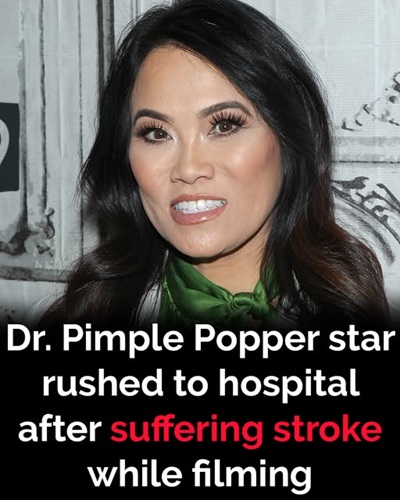
Sandra Lee, widely known as the host of the television series Dr. Pimple Popper, has spoken publicly about a serious health emergency she experienced while filming one of her spin-off productions.
She is a board-certified dermatologist who became widely recognized through social media and television for treating complex skin conditions and helping patients with severe dermatological concerns in a clinical setting.
During filming of Dr. Pimple Popper: Breaking Out, Sandra Lee experienced sudden and unexpected…
CONTINUE READING…
She is a board-certified dermatologist who became widely recognized through social media and television for treating complex skin conditions and helping patients with severe dermatological concerns in a clinical setting.
During filming of Dr. Pimple Popper: Breaking Out, Sandra Lee experienced sudden and unexpected physical symptoms that initially seemed minor but later developed into a serious medical emergency requiring urgent hospital care.
She has explained in interviews that the episode began with unusual sweating and discomfort, which she initially attributed to common causes such as stress or hormonal changes during a busy filming schedule.
While still on set, her symptoms intensified, and she began feeling unwell enough to leave and rest, but soon noticed additional neurological signs that raised serious concern about her health condition.
Lee later described experiencing weakness on one side of her body, difficulty walking, and loss of coordination, which are symptoms often associated with neurological events such as a stroke.
She also reported difficulty speaking clearly, including slurred speech and trouble articulating words, which are recognized warning signs of reduced blood flow to the brain.
At that point, she began to suspect that something more serious might be happening, and the combination of symptoms prompted her to seek immediate medical attention at a hospital.
Medical professionals later confirmed that she had suffered an ischemic stroke, a condition that occurs when a blood vessel supplying the brain becomes blocked, reducing oxygen flow to brain tissue.
An ischemic stroke can cause brain cells to begin dying within minutes if blood flow is not restored, making rapid diagnosis and treatment essential for limiting long-term damage and complications.
Lee has described the experience as emotionally shocking, especially because she was aware of the symptoms medically, yet still found it difficult to fully process what was happening to her body.
Medical experts widely recognize that high blood pressure, elevated cholesterol, smoking, diabetes, and stress are among the key risk factors that can increase the likelihood of ischemic stroke.
Lee has used her platform to raise awareness about stroke symptoms, encouraging the public to take early warning signs seriously rather than dismissing them as temporary or harmless issues.
She has emphasized that acting quickly during a suspected stroke is critical, as immediate medical intervention can significantly reduce brain damage and improve long-term recovery outcomes.
One widely used public health guideline for recognizing stroke symptoms is the FAST method, which helps individuals identify early warning signs and respond appropriately in emergency situations.
FAST stands for Face, Arms, Speech, and Time, representing key indicators that can help determine whether someone is experiencing a stroke and needs urgent medical attention.
Facial drooping on one side of the face can indicate nerve impairment, while arm weakness or inability to raise both arms evenly is another common symptom of stroke onset.
Speech difficulties, including slurred or confused speech, are also critical warning signs that suggest impaired brain function and require immediate emergency response without delay.
The final component, Time, emphasizes that emergency services should be contacted immediately if any of these symptoms are observed, as rapid treatment can be life-saving.
Lee has also spoken about cultural attitudes toward stroke awareness, noting that in some communities, health emergencies like this are not always openly discussed or fully understood
By sharing her personal experience publicly, she hopes to reduce stigma, improve awareness, and encourage more people to recognize the importance of seeking medical help without hesitation.
Her message highlights that even medically trained individuals can initially underestimate symptoms, reinforcing the importance of trusting physical warning signs rather than dismissing them.
Since her recovery, she has continued to emphasize preventive health care, regular medical checkups, and lifestyle management as important tools in reducing long-term health risks.
Sandra Lee’s experience serves as a reminder that strokes can occur unexpectedly, even during active professional work, and that awareness of symptoms can make a critical difference in outcomes.
Today, she continues to advocate for education around stroke recognition, encouraging people worldwide to understand symptoms early and respond quickly to protect brain health and overall survival.