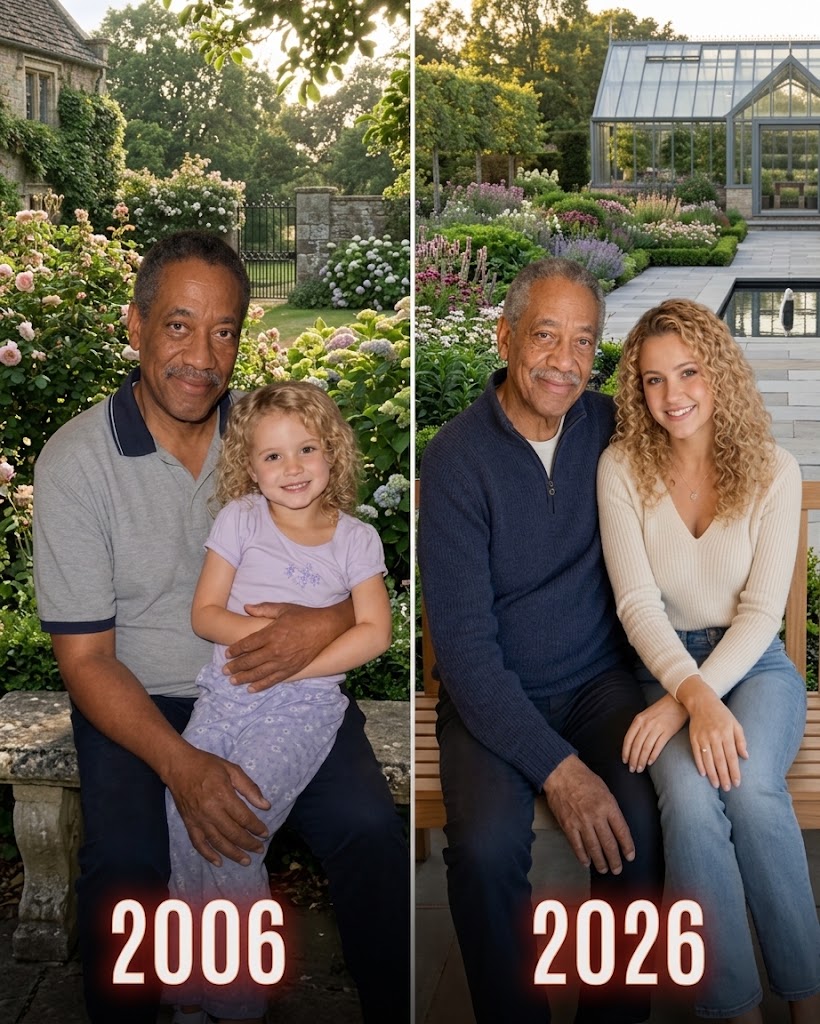
Part 1 — The Night the Snow Took Everything
People like to say that time heals every wound.
At seventy years old, I’ve learned that isn’t entirely true.
Time teaches you how to carry certain wounds. It dulls the sharpest edges. It helps you wake up, make coffee, pay bills, laugh at a joke, and keep moving even when part of you remains trapped in a moment from decades ago.
But some grief never disappears.
And sometimes, the truth behind that grief waits years before finding its way back to you.
I had already buried two wives and watched more friends leave this world than I cared to count. I thought life had exhausted its ability to surprise me.
Then my granddaughter Emily placed a folded note on our kitchen table.
Six words were written across it.
IT WASN’T AN ACCIDENT.
Those words dragged me straight back twenty years.
Back to the night I lost almost my entire family.
It happened just before Christmas.
My son Michael, his wife Rachel, and their children, eight-year-old Sam and five-year-old Emily, had come to my house for an early holiday dinner.
We lived in the sort of small town where neighbors waved from their porches and everyone knew which family had lived in which house for three generations. Winter storms were nothing unusual.
That evening, the forecast called for a few harmless flurries.
Maybe an inch or two.
Instead, the sky seemed to split open.
By early evening, thick snow was blowing sideways against my windows.
Michael decided they should leave before the roads became worse.
I stood at the front door while he held sleepy little Emily against his chest. She was bundled inside a puffy winter coat, her cheek resting on his shoulder.
“Don’t worry, Dad,” Michael told me. “We’ll be okay. I just want to get the kids home before it gets too late.”
I remember looking past him at the snow.
Something inside me tightened.
I almost asked them to stay.
To this day, I wish I had.
But I simply hugged them goodbye and watched their taillights disappear through the storm.
It was around seven in the evening.
Three hours later, someone knocked on my door.
Not a friendly knock.
Not the casual tap of a neighbor.
It was hard. Urgent.
The kind of knock that somehow tells you your life is about to change before you even turn the handle.
Officer Reynolds stood outside.
Snow was melting from his uniform, but what I noticed most was his face.
I knew immediately.
There had been a crash.
Michael’s car had lost control on an icy rural road and gone into the trees.
My son was dead.
Rachel was dead.
Eight-year-old Sam was dead.
Only Emily had survived.
She was five.
I don’t remember much about the drive to the hospital. I remember fluorescent lights. A hard plastic chair. A doctor speaking gently while I struggled to understand words that seemed to be coming from underwater.
Emily had suffered a concussion, broken ribs, bruising, and deep marks across her body from the seatbelt.
But she was alive.
The doctors said the trauma might leave her memory of the accident fragmented.
She might remember pieces someday.
Or she might never remember it at all.
“Don’t force her,” they advised me. “Let her mind recover in its own time.”
So I didn’t ask questions.
I didn’t make her relive anything.
Overnight, I became everything she had left.
I was fifty years old, grieving my son, my daughter-in-law, and my grandson—and suddenly learning how to raise a five-year-old girl.
Everyone called Emily’s survival a miracle.
The doctors said it.
The police said it.
Even our pastor used the word while standing before three closed caskets.
At the time, I desperately needed to believe him.
Part 2 — Learning to Become Her Home
The first years after the accident were a blur of grief mixed with ordinary responsibilities.
Life didn’t stop simply because ours had been shattered.
Emily still needed breakfast.
She still needed clean clothes.
She still had school.
She still needed someone to brush her hair.
I hadn’t prepared a child’s meal in decades, but I learned.
I discovered that combing a little girl’s hair required far more patience than I expected. I sat through school performances, parent-teacher conferences, scraped knees, birthday parties, science projects, and sleepless nights.
Once, I sat in a crowded school gym with tears filling my eyes while Emily performed as “Snowflake Number 3” in a winter pageant.
No one around me understood why I was crying.
But I did.
She was alive.
Sometimes that fact alone overwhelmed me.
Emily was never a difficult child.
If anything, she was too easy.
She rarely complained. She didn’t throw tantrums. She followed rules without being asked twice.
But every now and then, she would stare toward the front door with an expression that broke my heart.
It was as though some part of her was still expecting her mother or father to walk through it.
Eventually, she asked me the question I had dreaded.
“Why aren’t Mom and Dad coming back?”
I had rehearsed my answer countless times.
“It was an accident, sweetheart. There was a terrible storm. Nobody meant for it to happen.”
She quietly accepted my words.
After that, she almost never asked about the crash again.
Years passed.
Emily grew into a thoughtful, intelligent girl. She loved mysteries and puzzles, and she seemed to notice details other people overlooked.
There was a seriousness about her, too.
Sometimes I would look at her and think she had aged too quickly.
As if losing her family had placed an invisible weight on her shoulders.
Still, we built a life.
Not the one either of us had expected.
But a good one.
When she eventually left for college, the silence in my house nearly destroyed me.
I cried after she drove away.
More than I had cried at the funeral, if I’m being truthful.
There is something strange about raising a child after enormous loss. You become so focused on keeping them safe that you don’t notice how deeply their presence is keeping you alive too.
Four years after graduating, Emily came home.
She wanted to save money before getting her own place.
By then she was twenty-five and working as a paralegal for a small legal research firm downtown. She talked about eventually clerking and possibly going further in the legal field.
She was independent, capable, and brilliant.
But to me, she was still the little girl who used to fall asleep against my shoulder whenever storms frightened her.
Having her home again felt natural.
She came back from work around six most evenings. We ate together at the kitchen table while she told me about unusual cases, obscure laws, and odd things she had discovered during research.
I loved those dinners.
Then, a few weeks before the twentieth anniversary of the crash, Emily changed.
Not dramatically.
She simply became quieter.
Focused.
Distracted.
And then she began asking questions.
“Grandpa, what time did Dad leave your house that night?”
Another evening:
“Did the police ever contact you again after the crash?”
Then:
“Do you remember whether anyone else was supposed to be using that road?”
At first, I assumed she was trying to understand her past.
Maybe the anniversary had stirred something.
But there was something unsettling about the way she listened to my answers.
She wasn’t merely curious.
She was checking them against something she already knew.
Part 3 — The Note on the Kitchen Table
One Sunday afternoon, Emily came home much earlier than usual.
She didn’t even take off her coat.
She stood near the doorway holding a folded sheet of paper.
Her face was pale.
“Grandpa,” she said. “Can we sit down?”
My stomach tightened.
We went to the kitchen table.
That old table had witnessed almost our entire life together—birthday cakes, report cards, spilled milk, Sunday pancakes, homework, arguments, apologies.
Emily sat across from me.
Her fingers were trembling.
“I need you to read something before I explain,” she said. “And I need to admit something.”
She pushed the paper toward me.
I unfolded it.
There, in Emily’s careful handwriting, were the words:
IT WASN’T AN ACCIDENT.
For several seconds, I could only stare.
My chest tightened so suddenly that I wondered if something was wrong with my heart.
I tried to laugh.
“Emmy, what is this? Some kind of legal exercise?”
She didn’t smile.
Instead, she looked directly into my eyes.
“I remember things, Grandpa.”
My attempt at humor vanished.
“What things?”
“Things people said I probably wouldn’t remember.”
She reached into her bag.
Then she placed an old silver flip phone on the table.
It was scratched, outdated, and looked like it belonged in another lifetime.
In many ways, it did.
“I found this in the county archive,” she said. “It was inside a sealed courthouse box. It wasn’t properly listed as evidence. I had to trace it through the serial number.”
I stared at the phone.
“Whose is it?”
Instead of answering immediately, she opened it.
“There were voicemail recordings saved on it from the night of the accident.”
My mouth went dry.
“And one had been deleted,” she continued. “But not completely.”
Suddenly, that little piece of plastic seemed more dangerous than anything I had ever held.
“What did it say?”
Emily swallowed.
“They weren’t alone on that road.”
She paused.
“And someone helped make sure the truth about what happened never came out.”
My heartbeat became so loud I could hear it in my ears.
“Who?”
For a moment, she glanced toward the hallway.
Then she looked back at me.
“Do you remember Officer Reynolds?”
Of course I remembered him.
The man who had knocked on my door.
The man who had told me my family was gone.
“He told me they died quickly,” I whispered.
Emily nodded.
“He also told you there were no other vehicles involved.”
She picked up the phone.
Then she pressed play.
Static filled the kitchen.
Wind.
An engine.
And then a frightened male voice emerged through the noise.
“I can’t keep doing this. You said nobody would get hurt.”
A second voice answered.
Hard.
Controlled.
“Just drive. You missed the turn.”
The message ended.
For several seconds, neither of us moved.
Finally, I said the only thing my mind could manage.
“That doesn’t prove what happened.”
“I know,” Emily replied.
Then she looked at me with an expression I will never forget.
“That’s why I kept searching.”
Part 4 — What Emily Discovered
Over the next hour, my granddaughter dismantled the story I had believed for twenty years.
She had spent months searching old accident reports, court files, employee records, internal investigations, and archived documents.
Working at a legal research firm had given her the skills to understand where information could disappear—and how to find traces of it.
She compared badge numbers.
Dates.
Testimony.
Personnel records.
Eventually, she found Officer Reynolds’s name in an Internal Affairs investigation from the same period as our family’s crash.
My hands went cold as she explained it.
“Reynolds was being investigated,” she said. “They suspected him of falsifying reports.”
“For what reason?”
“A private trucking company was paying him.”
I stared at her.
She continued.
“They were allegedly paying him to redirect accident reports. If one of their trucks or pieces of equipment caused a problem, he could make the paperwork less damaging. Sometimes accidents were blamed on weather or driver error instead.”
I shook my head.
“What does any of that have to do with Michael?”
Emily’s eyes filled with tears.
“That road should have been closed.”
Everything inside me went still.
“What?”
“A semi had jackknifed there earlier that day. There should have been barricades preventing people from entering that stretch.”
She struggled to finish.
“But the barriers were removed.”
“By Reynolds?”
She nodded.
The room seemed to shrink around me.
Emily showed me information from the old report.
The original explanation had been simple: Michael lost control on ice and left the road.
But the physical evidence hadn’t entirely fit.
“The tire marks weren’t consistent with someone simply sliding,” Emily explained. “Dad was trying to avoid something.”
I already knew the answer before she said it.
“The truck,” I whispered.
She nodded again.
“They came around that road and encountered a vehicle that should never have been there. Dad swerved.”
For twenty years, I had pictured my son helplessly losing control in the snow.
Now another image replaced it.
Michael gripping the steering wheel.
Rachel beside him.
Sam and Emily in the back.
A truck appearing where the road should have been closed.
One desperate turn.
One impossible second.
My son hadn’t simply lost control.
He had tried to save his family.
My eyes burned.
Then a question escaped me.
“How did you survive?”
Emily looked down at the table.
“I was asleep.”
Her voice was barely audible.
“I was in the back seat and didn’t see what was happening. I didn’t brace myself before the impact. The doctors think the way the seatbelt caught me may have helped.”
I reached across the table and took her hand.
“You remembered all of that?”
“Not at first.”
She wiped her eyes.
“It started coming back in pieces. Nightmares. Sounds. Things that didn’t feel like dreams anymore.”
She glanced toward the old phone.
“When I heard that recording, more of it came back.”
I tightened my grip on her hand.
For the first time, I understood that while I had spent twenty years protecting Emily from the past, she had been carrying pieces of it inside her all along.
Part 5 — The Man Who Could No Longer Answer for It
Eventually, after everything she had told me, I asked the obvious question.
“What happens now?”
Emily was silent.
Then she sighed.
“Officer Reynolds died three years ago.”
I leaned back.
The answer hit me harder than I expected.
A heart attack.
That was all.
The man whose decisions had helped set our tragedy in motion was gone.
No courtroom.
No confrontation.
No chance for me to stand in front of him and ask whether money had really been worth more than my son’s life.
“So there’s nothing we can do,” I said.
“Not in the way you’re thinking.”
I looked at her.
She reached into her bag again.
This time, she removed a worn folder.
Inside was an old envelope.
My name was written across the front.
Martin.
My hands began trembling before I even opened it.
“Where did you get this?”
“From Reynolds’s wife.”
After his death, she had gone through his belongings.
Among his papers she discovered old notes, copies of reports, and documents that had never been officially filed.
There was also a confession.
And a letter addressed to me.
I unfolded it.
Reynolds’s wife explained what her husband had done.
He had been drowning in debt.
The trucking company offered him money to look away from certain problems and reshape reports that might otherwise lead to lawsuits.
At first, perhaps he convinced himself it was only paperwork.
No one would be hurt.
No family would ever know.
Then came the storm.
The disabled truck.
The open road.
Michael’s car.
According to the letter, Reynolds had realized the danger too late. He tried to get the road blocked again, but by then the chain of events he had helped create could no longer be stopped.
At the end, his wife had written words I will never forget.
She could not undo her husband’s choices.
She could only hope that knowing the truth might finally bring me some measure of peace.
I read the letter once.
Then twice.
Then a third time.
For twenty years, my grief had been shapeless.
A storm.
Bad luck.
A meaningless tragedy.
Now it had edges.
Names.
Choices.
Consequences.
I wasn’t sure that made the pain easier.
But strangely, it made the past feel real again.
My family hadn’t simply vanished into the snow.
There was a story behind what happened.
And at last, Emily and I knew it.
Part 6 — The Things We Had Never Said
That evening, we did what we had done every December for years.
We lit candles.
Usually, our remembrance was quiet.
Three flames for Michael, Rachel, and Sam.
We would sit together, say very little, and let silence speak for us.
But that night was different.
For the first time in twenty years, Emily wanted to talk.
So did I.
She told me things she had never said before.
As a little girl, whenever she missed her mother badly enough, she sometimes convinced herself the sound of the wind was Rachel’s voice.
She told me about the nightmares.
About waking suddenly, unable to breathe.
About feeling the pressure of the seatbelt across her body even though she was safely in bed.
I listened without interrupting.
Then I told her one of my own secrets.
I still carried one of Sam’s drawings in my wallet.
I had kept it there for years.
The paper was creased and faded from being unfolded so many times.
Whenever I missed him, I sometimes looked at it.
It was my private connection to an eight-year-old boy who never had the chance to become anything older.
Emily cried when I showed her.
So did I.
Outside, snow began falling again.
Years earlier, that sight would have tightened something inside me.
Snow had become the background of the worst night of my life.
But that evening, it looked different.
It fell softly past the window.
There was no screaming wind.
No headlights disappearing into darkness.
No knock waiting at the door.
Just snow.
Quiet.
Gentle.
Almost peaceful.
Part 7 — What the Truth Gave Back to Us
Emily reached across the table and took my hand.
For most of her childhood, I had been the one reaching for hers.
When she was frightened.
When she was sick.
When she woke from nightmares.
When she needed someone to remind her she was safe.
That night, she was comforting me.
“We didn’t lose them for nothing,” she said softly.
I looked at her.
“And Grandpa?”
“Yes?”
“You weren’t wrong all those years ago.”
I frowned.
“What do you mean?”
“You always said something about that night never felt right.”
I remembered standing at the front door as Michael drove away.
That twisting feeling in my stomach.
The uneasiness I had eventually dismissed as guilt.
Emily squeezed my hand.
“You weren’t imagining it.”
My throat tightened.
For twenty years, I had blamed myself in a hundred quiet ways.
Why hadn’t I insisted they stay?
Why hadn’t I checked the road conditions?
Why hadn’t I stopped my son from leaving?
The truth didn’t erase those questions.
But it finally allowed me to understand something.
I had not caused the tragedy.
Michael had not been careless.
Rachel had not made a bad decision.
My family had encountered a danger they were never supposed to face.
Nothing could restore the years we had lost.
No confession could bring Michael back through my front door.
No report could let Sam grow up.
No truth could give Emily back the childhood she should have had.
But truth could still give us something.
It could free us from a lie.
I looked at my granddaughter—the five-year-old survivor I had once carried home from the hospital, now a strong young woman who had uncovered what an entire system had buried.
For years, I believed I had saved her.
I had raised her.
Fed her.
Protected her.
Loved her through everything.
But sitting at that kitchen table, I finally understood that the saving had never gone in only one direction.
Emily had given me a reason to keep living when I thought I had lost everything.
And now, twenty years later, she had returned something else to me.
The truth.
I pulled her into my arms.
For a moment, neither of us spoke.
Then I whispered the words I wished I had understood years earlier.
“You saved both of us, Emily.”
And as the snow continued falling beyond the window, I knew it was true.
The past was still painful.
It always would be.
But for the first time in twenty years, it no longer felt like a dark road disappearing into a storm.
We finally knew where that road had led.
And together, we could begin walking forward.