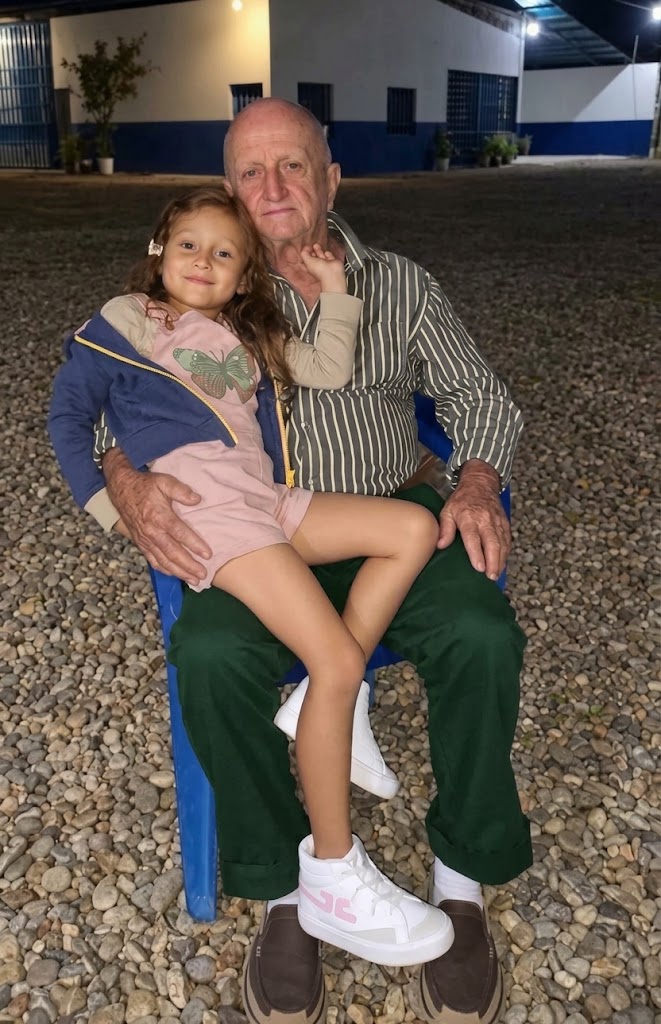
“Mom, Grandpa and I have a special game we play when I take a bath. He tells me to close my eyes, and then something funny happens!”
My six-year-old daughter, Emily, told me this while she was coloring at the kitchen table. At first, I smiled, thinking she was talking about another make-believe game she had invented with her grandfather. But when I asked her to tell me more, I realized I didn’t understand what she was describing.
I set down the knife I had been using to prepare dinner and pulled up a chair beside her.
“What sort of game is it, sweetheart?” I asked gently.
Emily shrugged her shoulders. “I close my eyes, and Grandpa asks me to guess what he’s doing.”
Her response made me curious. Children can transform the simplest activities into elaborate games, but I wanted to understand precisely what she meant. I carefully asked whether she liked playing it and whether anything about it ever made her feel uneasy.
“No, Mommy,” she answered. “It makes me laugh.”
I reassured her that she could always come to me with anything she wanted to discuss, whether it involved games, surprises, or situations she didn’t fully understand. I also explained that she never had to obey an instruction if it made her feel uncomfortable.
Emily nodded before returning to her drawing, seemingly content with our conversation. However, the exchange continued to occupy my thoughts for the rest of the evening.
My father, George, was seventy-six and had always been a significant part of Emily’s life. From the time she was a toddler, he had helped with school pickups, weekend outings, gardening activities, and bedtime stories. He was a patient, reliable man who seemed to have an endless supply of creative ideas for keeping his granddaughter entertained.
Emily absolutely loved being with him.
Every Tuesday and Thursday, Dad picked her up from school. Sometimes, they went to the park, where Emily loved watching the ducks. Other times, they came home carrying unusual leaves, little stones, or flowers they had collected for our garden.
He had shown her how to grow sunflowers from seeds and patiently taught her why butterflies were attracted to particular plants. Whenever thunderstorms frightened her, he would sit beside her and tell stories until she felt safe and relaxed enough to fall asleep.
My husband, Daniel, worked long hours as an engineer, and managing our professional responsibilities alongside family life could sometimes be challenging. Dad regularly offered to help, never asking for anything in return.
“Take care of whatever you need to finish,” he would say. “Emily and I will come up with something enjoyable to do.”
His willingness to support us had made a real difference in our lives, which was why my daughter’s unusual description remained stuck in my mind.
Later that evening, after Emily had gone to bed, I shared the conversation with Daniel. He listened attentively and admitted that he, too, wanted to know more about the game.
“We shouldn’t assume anything without knowing the facts,” he said. “But we ought to ask your father what they’ve been playing.”
I agreed with him. Rather than letting our questions and uncertainty build, we decided that speaking to my father calmly and directly would be the best approach.
The next afternoon, Dad arrived to spend some time with Emily. While we were all together in the living room, I asked him about the game.
For a moment, he appeared puzzled. Then he burst into laughter.
“Oh, you mean that game!” he exclaimed.
Emily immediately sprang to her feet from the carpet.
“Grandpa, don’t tell her! It’s supposed to be a surprise!”
Dad smiled at her excitement before explaining that he had been helping Emily prepare a special birthday present for me. Together, they were putting together a handmade family scrapbook filled with photographs, drawings, and little notes recalling our favorite memories.
Their eye-closing game was part of their effort to prevent me from discovering the surprise before it was ready. Whenever Emily shut her eyes, Dad would quietly place a drawing or photograph into a folder. He would then ask her to guess which family memory they would add to the scrapbook next.
Their explanation was perfectly understandable, but I also recognized that a simple conversation with my father could have saved me several days of needless concern.
I laughed along with them, though I reminded Dad that games should always be explained clearly to children and that their comfort should be respected during ordinary activities and routines.
Dad agreed without hesitation.
“I would never want her to feel confused or uncomfortable,” he assured me. “We were simply trying to make your surprise extra special.”
Emily hurried into her bedroom and soon returned with a small envelope decorated with colorful stars.
“Can we show Mommy now?” she asked eagerly.
Dad acted as though he needed time to consider the request before finally nodding.
Inside the envelope, I found a handwritten invitation to a special family afternoon in the garden. Emily had helped organize every detail, from homemade lemonade and simple decorations to a collection of photographs capturing some of our happiest family memories.
Although the scrapbook had not yet been completed, its opening page already contained a photograph of Emily planting sunflowers alongside her grandfather.
Underneath the picture, she had written in large, uneven letters: “Grandpa teaches me new things.”
As I read those words, I felt emotion rising in my throat. It was a modest present, yet it reminded me that even the smallest experiences could hold tremendous meaning for a family.
During the following days, we joined forces to complete the scrapbook. Daniel contributed photographs from our family holidays, I added memories from Emily’s earliest years, and Dad wrote brief stories about the activities he and his granddaughter loved sharing.
Emily filled the pages with stickers, bright illustrations, and tiny paper flowers.
When the family afternoon finally arrived, we presented the finished scrapbook, and Dad seemed nearly as thrilled as Emily. She carefully turned each page, pointing out the photographs and enthusiastically explaining the memories associated with them.
Seeing the two of them together brought an important lesson back to me: healthy family relationships are built on trust, and honest communication is one of the ways that trust becomes stronger.
Parents should not automatically imagine the worst whenever a child mentions something unfamiliar. Nevertheless, asking thoughtful questions, listening without criticism, and making sure children understand that they can speak freely are vital to helping them develop confidence as they grow.
I felt thankful that Emily had been comfortable enough to share her thoughts with me. I was equally relieved that we had chosen open communication instead of allowing uncertainty to influence how we viewed the situation.
From that point onward, our family agreed to make a greater effort to communicate clearly, particularly when it involved games, surprises, or the everyday routines surrounding Emily’s care.
The scrapbook eventually became one of our family’s most cherished belongings.
Years from now, I can picture Emily opening it again, smiling at the crooked drawings, familiar old photographs, and stories her grandfather had carefully taken the time to preserve.
What started as a puzzling conversation around the kitchen table ultimately taught us that listening attentively, asking considerate questions, and speaking honestly can strengthen the bonds that hold a family together.