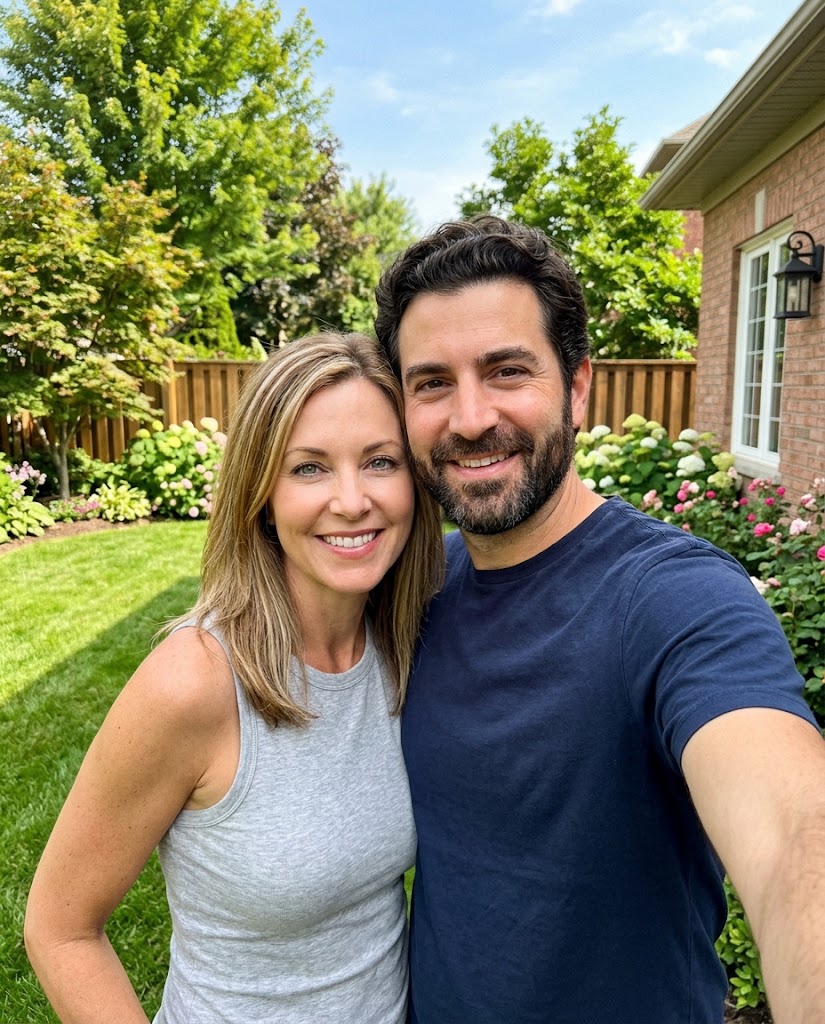
Julian has always been the type of person who pays attention to the smallest details. He knows when I’ve had a rough day, remembers the snacks I love, and never forgets the memories that mean the most to me. Most people remember birthdays and anniversaries, but Julian remembers those little things that make a person feel truly understood.
One date he never forgets is March 14, the day my grandmother, Ruth, passed away. She helped raise me when I was young, and some of my happiest memories are from her little yellow house on Poplar Street. She grew tomatoes in the backyard, played old country music throughout the day, and insisted she was unbeatable at Scrabble, even though she regularly bent the rules. She also loved sunflowers because she believed they were simple, cheerful, and honest.
Three years ago, Julian surprised me with a single sunflower on the anniversary of her passing. He remembered that I had once told him my grandmother disliked roses because they were too dramatic. When I told him how much the flower meant to me, he simply smiled and said he thought she would have approved. That moment reminded me just how carefully he listened, even when I assumed no one was paying attention.
We met twelve years ago in a grocery store while reaching for the same carton of milk. A conversation about confusing yogurt labels led to coffee at a nearby café, and neither of us remembered to buy the milk. Over the years, we created a comfortable life together. Julian worked downtown as an accountant, left home at the same time every morning, and usually called during lunch simply to hear my voice. Every Thursday evening, he told me he was going to the gym.
One Thursday, though, he came home looking unusually concerned. His tie was loose, and he kept checking his pockets.
“My phone is missing,” he explained.
We searched his briefcase, jacket, car, gym bag, and everywhere else we could think of. We even tried tracking the device through my laptop, but it appeared to be offline. Julian was worried about losing his contacts and work information, so he ordered a replacement and arranged to use a temporary phone the next morning.
The following day, while I was folding laundry, my phone rang. Julian’s name appeared on the screen, but the voice on the other end belonged to a stranger.
“My name is Charlie,” the man explained. “I found this phone yesterday. I charged it and saw your number listed as the emergency contact.”
I felt relieved. Charlie offered to bring the phone to our house because he was already running errands nearby. About fifteen minutes later, an older silver pickup pulled into our driveway. Charlie got out carrying Julian’s phone and handed it to me.
I thanked him and offered to pay for his gas, but he politely refused.
Before he left, I asked where he had found the phone. Julian wanted to know whether he had misplaced it at work or at the gym.
“Outside the family visitation center on Grant Street,” Charlie replied.
My smile disappeared. I knew the building well. Years earlier, I had volunteered there as part of a college psychology course. The center provided a supervised environment for children visiting family members under specific arrangements.
I remembered the waiting room, its colorful walls, the shelves filled with donated books, and the large window overlooking the parking lot. Some children spent their visits drawing pictures, reading stories, or simply waiting for a familiar face to appear.
One little girl named Lily had stayed in my memory. She often brought drawings to share with her mother. Whenever a scheduled visit failed to happen, she would quietly fold her picture and put it away. Watching children deal with that kind of disappointment had taught me how much a little patience and kindness could mean.
That evening, years ago, I had told Julian about my experience. I remembered saying, “Nobody should have to wait for someone who might never come.”
I had nearly forgotten that conversation. Julian apparently hadn’t.
When Charlie noticed my concern, he explained that he volunteered at the center. Then he told me something I never expected.
“I’ve seen your husband there every Thursday for almost a year,” he said.
I stared at him. Julian had always told me he was going to the gym on Thursdays. For a moment, I couldn’t understand why he had kept this part of his life from me.
Charlie quickly reassured me that Julian wasn’t doing anything harmful. He explained that my husband had been volunteering with the children, reading stories, helping with crafts, and inventing playful characters to entertain them while they waited for their scheduled visits.
According to Charlie, Julian had become especially popular with a five-year-old boy named Theo. The children had nicknamed Julian Daddy Dinosaur because he often pretended to be a friendly dinosaur during their games.
The previous afternoon, the children had built a cardboard volcano and painted it green. That explained the green mark I had noticed on Julian’s wrist the night before.
Charlie continued telling me about Theo. The little boy sometimes struggled when a scheduled visit with his father did not happen as planned. Julian had made a habit of spending time with him, helping him draw, build cardboard castles, and imagine dinosaur-filled adventures.
On the day Julian lost his phone, Theo had been disappointed because his father had not arrived at the expected time. Julian stayed with him and comforted him before leaving. Charlie believed the phone had slipped out of Julian’s jacket during that moment.
I listened quietly. His explanation was completely different from the possibilities that had crossed my mind.
But one question was still bothering me.
“Why didn’t Julian tell me?” I asked.
Charlie paused before answering.
“Perhaps he wanted to do something helpful without making it about himself.”
Then he reached into his pocket and pulled out a small green plastic dinosaur. One eye had been drawn with a marker, and its tail had been fixed with tape.
“Theo asked me to give this to Julian,” Charlie explained. “He said Daddy Dinosaur might need it.”
Charlie also showed me a handmade yellow paper crown covered with stars and hearts. Across the front, the children had written KING DINOSAUR in uneven blue letters.
Apparently, they had voted to make Julian wear it during their games.
I laughed through my tears as Charlie told me Julian had once tried taking the crown off, only for the children to hold a vote against him.
Before leaving, Charlie told me one more thing. A few months earlier, he had asked Julian why he continued volunteering after a long day at work.
Julian had answered, “My wife once told me this was the loneliest room she had ever seen. I thought maybe I could help make the waiting a little easier.”
I remained on the porch long after Charlie drove away, holding the recovered phone and the little dinosaur. I kept thinking about all those Thursday afternoons Julian had spent making children smile, remembering their favorite games, and staying beside them when they needed company.
I sent him a brief email at work asking if we could talk when he got home. He responded almost immediately, worried that something was wrong.
That afternoon, Julian came home early. When he entered the kitchen and saw his phone, the dinosaur, and the paper crown sitting on the table, he stopped.
“Charlie found your phone,” I told him. “He also told me about Thursdays.”
Julian rubbed the back of his neck. “I was hoping I could explain it myself.”
“Why didn’t you tell me?”
He took my hands and looked directly at me.
“I wasn’t trying to hide another life from you. I just didn’t want the children to feel as though I was doing this for attention.”
I understood what he meant, but I still wanted to know why he had kept it from me for so long.
Julian reminded me of a conversation we had during our early dates. He remembered how upset I had been after volunteering at the center and how strongly I felt about children spending difficult afternoons waiting for family members.
“I kept thinking about what you said,” he explained. “I couldn’t change every situation, but I could be there for a while. I could read a story, play a game, or help a child feel less alone.”
He smiled slightly.
“And then one day, I became Daddy Dinosaur.”
I laughed, and he finally relaxed.
“But why didn’t you tell me?” I asked again, this time more gently.
“Because I know you,” he replied. “You would have wanted to help immediately. You would have learned every child’s name, remembered their favorite snacks, and spent your lunch breaks buying craft supplies.”
I couldn’t argue with that.
He continued, “You care deeply about people. Sometimes you carry their worries long after you leave the room. I wanted to do this quietly, without making you feel that you had another responsibility.”
I looked at the man I had loved for twelve years. He was still the same person who remembered sunflowers, noticed when I was upset, and listened closely to things I had said years before.
I unfolded the paper crown and gently set it on his head.
“Every Daddy Dinosaur deserves his crown,” I told him.
He laughed, and for a moment we stood together in the kitchen, holding hands beside a recovered phone and a tiny plastic dinosaur.
Later that evening, Julian told me more about Theo. The boy’s family was going through a difficult period, and his father was trying to rebuild a more stable routine. Some weeks went smoothly; other weeks required patience and flexibility.
Julian understood that he couldn’t solve every problem facing the family. He couldn’t control transportation, schedules, or the circumstances that brought children to the center. But he could provide a friendly presence during the hours he spent there.
When I asked about the dinosaur, Julian explained that Theo wanted him to keep it for a little while. The toy had become part of their games, and Julian had promised to return it during the next visit.
“He wanted to make sure I returned,” Julian said with a smile.
That small detail stayed with me. Even an ordinary toy could become a meaningful reason for a child to look forward to the next Thursday.
I asked Julian if I could join him.
He looked concerned. He knew I might find the experience emotional, especially because of my memories of volunteering there years earlier.
“I probably will cry,” I admitted. “But you don’t have to do this alone, either.”
After a moment, he agreed that I could come with him the following week.
The next Thursday, I met Julian outside the center. He was carrying a paper bag filled with apple juice boxes decorated with dinosaurs. I felt nervous as we approached the entrance, but he reached for my hand.
Inside, the waiting room looked familiar. The chairs sat beneath the large window, and children’s books filled the shelves. In one chair was Theo, a little boy wearing a dinosaur shirt and shoes that flashed whenever he moved.
When he saw Julian, his face lit up.
“Daddy Dinosaur!”
He hurried across the room, and Julian knelt down to greet him. Theo immediately asked whether Julian had brought his green dinosaur back.
Julian reached into his jacket and handed it to him. Theo hugged the toy close, looking delighted.
Then the boy noticed me.
“Who’s she?”
“That’s my wife, Dani,” Julian explained.
Theo studied me carefully.
“Are you a dinosaur too?”
I smiled. “I could be. What kind should I be?”
After thinking about it, Theo made his decision.
“You can be Mommy Dinosaur. Daddy Dinosaur needs somebody.”
I glanced at Julian, who was smiling beside me.
“Then Mommy Dinosaur it is,” I replied.
Theo nodded happily and immediately began assigning everyone roles in a new cardboard adventure. Charlie, who was arranging boxes nearby, had once again been assigned the role of a turtle.
At 4:34, Theo’s father arrived. He explained that the bus had been delayed and apologized for being late. Theo hurried over to greet him, and his father knelt down to welcome him.
Julian and I stepped aside, giving them room for their visit. Watching them together reminded me that every family has circumstances outsiders may not completely understand. People can experience setbacks while working toward better routines, and children benefit when the adults around them provide patience and encouragement.
When it was time for us to leave, Julian carefully placed the little dinosaur beside Theo’s chair so the boy could find it easily.
On the drive home, I cried a little. Julian held my hand across the center console without saying anything.
“Is it always this emotional?” I eventually asked.
“Not always,” he replied. “But some days are harder than others.”
“How do you keep showing up?”
He thought for a moment.
“I can’t fix everything,” he said. “But while a child is waiting, I can help make the time feel a little less lonely.”
I understood then that Julian had never been trying to become a hero. He had simply found a small way to make a difference, one Thursday at a time.
The yellow paper crown now hangs on our refrigerator, held there by a sunflower magnet. Julian once suggested taking it down because visitors might ask about it. I immediately put it back.
“Let them ask,” I told him.
I go with him to the center on Thursdays whenever I can. We read stories, help with crafts, and sometimes build elaborate cardboard creations that collapse before we finish them. Julian still plays Daddy Dinosaur, and I have grown comfortable with my role as Mommy Dinosaur.
I have learned that helping someone doesn’t always mean solving their problems. Sometimes it means listening, offering encouragement, or simply being there when the day hasn’t gone as expected.
For years, I thought I knew every part of my husband’s routine. I knew when he left for work, how he drank his coffee, and which evenings he usually spent at the gym. When his missing phone led me to discover his Thursday visits, I briefly feared he had been hiding something painful from me.
Instead, I discovered a quiet act of kindness that had grown from a conversation we shared years earlier.
The experience changed the way I think about the small things people do for one another. Not every meaningful act needs an audience, and not every good deed comes with a grand announcement. Sometimes kindness is simply a book being read aloud, a cardboard castle built on the floor, or a familiar face returning to the same room each week.
Julian never expected praise for his time at the center. He simply remembered something that mattered to me and found his own way to put it into practice.
And every Thursday, when we walk through those doors together, I am reminded that small acts of kindness can bring comfort, create connection, and make an ordinary afternoon feel just a little brighter.