Grandma had overcome the toughest battle of her life, yet the people who had promised to support her were nowhere to be seen. When she finally asked me one simple question in a hushed voice, I realized I would never see my family the same way again.
The day my grandmother was declared cancer-free should have been one of the happiest moments of our lives.
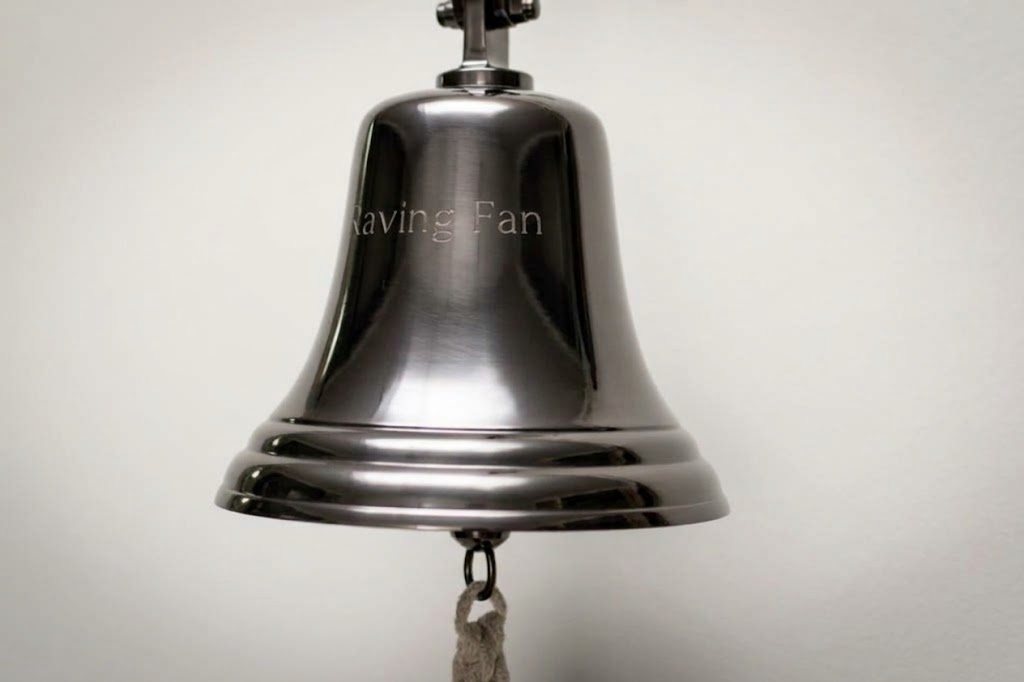
After months of medical appointments, exhausting treatments, uncertainty, and fear, she was finally supposed to ring the hospital’s victory bell while our entire family stood beside her, cheering.
I arrived carrying flowers and balloons, with my phone ready to capture the unforgettable moment.
Instead, we discovered that our family hadn’t even bothered to show up.
My name is Marissa, and if someone had asked me a year earlier, I would have confidently said that I belonged to a close-knit family.
We gathered for Sunday dinners almost every week.
We celebrated one another’s birthdays.
Every holiday was filled with lively conversations, family recipes, and countless photographs.
At least, that was the image we presented to everyone around us.
The reality was that my grandmother had always been the person who kept our family together.
She remembered every birthday and never forgot an anniversary.
Whenever someone fell ill, she prepared meals for them.
If someone lost their job, she discreetly placed money inside an envelope so they wouldn’t feel embarrassed.
When someone needed childcare, she changed her own plans without ever complaining.
Throughout her life, she had made sure she was there whenever anyone needed her.
Then cancer entered her life, and everything began to change.
The diagnosis left all of us shaken.
I can still remember sitting around Grandma’s dining table when she told us the news.
My father, Dennis, kept his eyes fixed on the floor.
My mother, Linda, quietly wiped tears from her face with a tissue.
My older brother, Ethan, immediately promised, “We’ll all do whatever we can to help.”
My sister, Brooke, nodded in agreement.
“We’re going to face this together,” she assured her.
Even my aunt Claire promised that Grandma would never have to fight the disease by herself.
At that moment, every promise seemed genuine.
During the first few weeks, everyone made at least some effort.
Dad drove her to two medical appointments.
Mom prepared soup for her on several occasions.
Brooke went with Grandma to one chemotherapy session.
Aunt Claire arranged a meal schedule, while Uncle Victor volunteered to take care of the lawn.
But gradually, life returned to normal for everyone except Grandma.
Medical appointments became a burden.
Treatments seemed to consume too much time.
Visits to the hospital began interfering with weekend activities.
Slowly, excuses took the place of the promises they had made.
Without anyone openly acknowledging it, the responsibility gradually fell on my shoulders.
I had never planned to become Grandma’s primary caregiver. It simply happened that way.
I drove her to her appointments.
I stayed beside her during chemotherapy.
I learned to keep track of her medications, and I listened whenever she confessed how frightened she felt.
Sometimes, she hardly said a word.
Other days, she entertained the nurses with jokes, as though she weren’t facing a life-threatening illness.
Her strength continued to amaze me.
Whenever I mentioned asking another family member to help, she would give me a gentle smile.
“Everyone has a busy life, sweetheart.”
Those words became her usual way of excusing everyone else’s absence.
She continued defending people who never seemed to deserve it.
When Dad canceled, she explained that his job was stressful.
When Mom forgot to call, Grandma said that mothers sometimes had too much on their minds.
When Ethan missed yet another visit, she insisted he was concentrating on his career.
When Brooke didn’t come around, Grandma reminded me that raising a young family kept her busy.
There was always a reason for their behavior, but Grandma never complained about it.
Even the nurses began noticing the pattern.
One afternoon, while Grandma was getting her blood drawn, a nurse named Alicia approached me privately.
“You’re here with her every single time,” she observed.
“I am,” I replied.
“You’re doing such a wonderful job.”
I offered her a polite smile, but deep down, I wanted to scream. I wasn’t supposed to be the only person helping my grandmother.
The months continued to pass.
Grandma endured operations, radiation treatments, countless medical scans, and many sleepless nights.
Whenever my phone rang, anxiety twisted my stomach into knots.
Then, at last, we received the news we had desperately hoped for.
The treatments had been successful.
Her scans showed no signs of cancer.
Grandma was officially cancer-free.
I cried more intensely than I had since I was a little girl.
Grandma simply smiled and murmured, “Thank God.”
The hospital arranged her victory bell ceremony for Friday afternoon.
Everyone in the family knew when it was happening.
For nearly three weeks, Grandma talked excitedly about the occasion.
“I can’t wait for all of us to be together,” she told me.
She even chose a beautiful, soft blue blouse because she wanted to look her best in the photographs.
Our family group chat quickly filled with enthusiastic responses.
“We’ll definitely be there.”
“We wouldn’t miss it.”
“So proud of Mom.”
“I’ll bring cupcakes.”
Even Ethan responded with a thumbs-up emoji.
For the first time in months, I allowed myself to believe that everyone truly intended to come.
When Friday finally arrived, I arranged to take the afternoon off work.
I purchased a fresh bouquet of flowers, cheerful yellow balloons, and Grandma’s favorite chocolate.
I also made sure my phone was fully charged so I could record the entire ceremony.
As we reached the oncology floor, Grandma gently squeezed my hand.
“I’m feeling nervous,” she confessed.
“You deserve every second of this moment,” I reassured her.
She smiled at me.
The nurses greeted her with genuine excitement, and several of them recognized us right away.
“Look who’s here!” Alicia called happily. “Our very own bell ringer.”
Grandma laughed.
“I honestly wasn’t sure I’d ever reach this day.”
“We always believed you would,” another nurse told her.
They asked whether the rest of our family would be arriving soon.
“They should be here any minute,” Grandma replied confidently.
I turned toward the elevator.
Its doors opened, revealing a man pushing a wheelchair.
But he wasn’t anyone we knew.
Five minutes went by, followed by another ten.
Grandma glanced down the hallway once more.
“The traffic is probably terrible,” she remarked.
“I’m sure they’ll arrive soon,” I told her.
The elevator opened again, and a couple walked past with their two children.
Still, nobody from our family appeared.
Each time the doors parted, Grandma lifted her head, hope visible in her eyes.
And every time a stranger stepped out instead, a little more of that hope disappeared.
I continued smiling because I couldn’t bear the thought of letting her see my disappointment.
I wrapped my arms around her.
“I brought you some flowers,” I said.
“They’re lovely.”
“And I brought balloons, too.”
She gave a quiet laugh.
“You’ve always been so good at spoiling me.”
I checked my watch again.
Twenty minutes had passed since the ceremony was supposed to begin, and our relatives were still nowhere in sight.
Hoping to distract myself, I opened the family group chat on my phone.
The messages I discovered made my hands tremble.
Ethan had written, “It’s been a long week. I’m exhausted.”
Brooke had responded, “I’m sorry. We’ve already made plans for dinner.”
Dad had sent a message saying, “I assumed someone else was driving your mother, so I made other plans.”
Then Mom replied, “Oh no! I completely forgot what time it was supposed to start.”
She had forgotten.
Every single one of them had known about the ceremony for weeks.
I stared at the screen, struggling to believe what I was reading.
There hadn’t been an emergency, an accident, or some unexpected crisis.
They had simply come up with excuses.
I felt an overwhelming urge to hurl my phone across the hallway.
Instead, I quietly placed it back inside my purse before Grandma could see the messages.
The nurses began gathering around us.
Even a small group of patients waiting for their appointments paused to watch.
Someone placed the rope connected to the brass bell into Grandma’s hands.
“Are you ready?” Alicia asked warmly.
Grandma nodded.
Her gaze traveled down the hallway one final time.
Then she turned toward me.
“Would you please stand beside me?”
“Always,” I promised her.
Taking a deep breath, she pulled the rope.
The bell rang through the hallway once, then twice, and finally a third time.
The nurses burst into enthusiastic applause.
Several wiped tears from their eyes.
One patient clapped so excitedly that his wife began laughing through her own tears.
The encouragement from complete strangers was greater than anything our own family had ever offered Grandma.
I recorded every moment, not because my relatives deserved to watch it later, but because Grandma deserved to have a memory of this incredible achievement.
When the applause gradually faded, several nurses stepped forward to embrace her.
“You made it.”
“We couldn’t be prouder of you.”
“You beat cancer.”
Grandma thanked each person individually.
That was simply the kind of woman she had always been.
She appreciated every kindness and treated everyone with grace.
As we made our way toward the elevator, she grew unusually silent.
I assumed the emotions of the moment had overwhelmed her.
Then she reached out and took my hand.
“Marissa?”
“Yes, Grandma?”
She stared at the closed elevator doors before quietly asking the question that broke my heart into pieces.
“Do you think they even care?”
For a few seconds, I couldn’t find the words to respond.
The woman who had devoted her entire life to caring for others was finally questioning whether any of her efforts had ever mattered to them.
I swallowed the painful lump in my throat and managed a smile, although neither of us believed it was genuine.
“I care about you,” I whispered.
She gently squeezed my hand.
“I know you do.”
The elevator doors slid open, and we entered together.
As the doors closed behind us, I caught sight of my reflection in the shiny metal.
Something within me had shifted permanently.
For months, I had been making excuses for my family, just as Grandma had done for years.
I wasn’t going to do that anymore.
As soon as we stepped outside the hospital, I took out my phone and placed a call.
I called my aunt Claire.
She answered after the second ring.
“Hi, Marissa. Is everything all right?”
I inhaled slowly before responding.
“Did you know that nobody showed up?”
A short silence followed.
“What are you talking about?”
“I’m talking about Grandma ringing the victory bell with me and the nurses. Not a single other family member came.”
Another lengthy pause followed.
“I thought your dad was driving everyone,” she explained. “I was still at work, and I genuinely believed you were all heading to the hospital together.”
“Dad assumed someone else was taking Mom. Ethan said he was too tired. Brooke had dinner plans. Mom forgot what time the ceremony started.”
Claire released a heavy sigh.
“I had no idea.”
“I believe you.”
Her reaction sounded sincere, unlike the responses I had received from everyone else.
“How is Grandma doing?” she asked softly.
I turned to look at Grandma, who was sitting in the passenger seat, gazing through the window.
“She asked me whether anyone even cared about her.”
Aunt Claire drew in a sharp breath.
“Oh, dear.”
“Yes.”
“I’ll call you again,” she promised.
Before I could respond, she ended the call.
I drove Grandma back to her house.
She did her best to act as though nothing unusual had happened.
She commented on the pleasant weather, asked if I wanted some leftovers for dinner, and thanked me once more for bringing her flowers.
Not once did she mention the empty hospital hallway.
Somehow, her silence hurt me more than tears would have.
When we reached her driveway, I helped her get inside.
The balloons drifted toward the ceiling while I arranged the flowers in her favorite crystal vase.
She gave me a polite smile.
“They look lovely.”
I glanced around the peaceful living room.
There were no decorations, no welcome-home banner, no cake, and no surprise party waiting for her.
Nothing at all.
So much for the excuse I had given myself earlier.
I headed into the kitchen.
“Come and sit down,” I told her.
“There’s no need to go to so much trouble for me.”
“I want to do this.”
I placed an order for her favorite Italian meal from a small family-owned restaurant nearby.
While we waited for the food, I searched through a kitchen drawer and found some candles.
Then I remembered a bakery located only three blocks away.
“I’ll return in about 20 minutes,” I told her.
“You really don’t have to.”
“But I want to.”
When I came back, I was carrying a little chocolate cake covered in white frosting.
The baker had written a message across the top: “YOU BEAT CANCER!”
Grandma immediately raised her hand to cover her mouth.
“You bought this for me?”
“You deserve to celebrate.”
Her eyes filled with tears once more.
“I just thought everyone would come.”
“I know, Grandma.”
“I wasn’t expecting gifts.”
She gazed at the cake for several seconds.
“I only wanted my family there.”
Those words remained in my thoughts throughout the evening.
Aunt Claire arrived shortly before dinner.
She entered the house with another bouquet tucked in her arms.
As soon as she spotted Grandma, she wrapped her in a tight embrace.
“I’m incredibly proud of you, Mom.”
Grandma smiled warmly.
“I knew you’d come sooner or later. You’re my daughter.”
Over Grandma’s shoulder, Claire glanced at me.
The regret written across her face was impossible to miss.
“I’m sorry I couldn’t be there,” she said.
Grandma gently patted her back.
“At least you’re here now.”
We shared dinner, and for a few hours, the evening almost felt like the old days.
Then my phone vibrated.
A message from Brooke appeared on the screen.
“I hope everything went well today! How did it all go?”
I stared at her words, unable to believe them.
She hadn’t even remembered the ceremony until that evening.
Another notification appeared, this time from Ethan.
“Has she rung the bell yet?”
Then Dad sent his own message.
“We’ll come by tomorrow.”
Tomorrow.
They behaved as though the timing made no difference, as if the ceremony had been nothing more than an ordinary medical appointment.
I left every message unanswered.
Instead, I created a new group chat and added every adult in our family.
Then I uploaded the recording.
I didn’t write a caption or offer an explanation.
I simply shared the entire video.
It opened with Grandma wearing a nervous smile.
Behind her, the hallway was empty. The recording captured every time she glanced toward the elevator, every moment of anticipation, and every expression of disappointment.
Then came the sound of the bell.
The nurses applauded enthusiastically.
Patients joined in the celebration.
One of the nurses wiped tears from her cheeks.
Throughout the recording, the camera remained focused on Grandma’s face.
Toward the end, her soft voice could be heard asking me, “Do you think they even care?”
Until that moment, I hadn’t realized my phone had recorded her question.
Now, every member of my family could hear it.
For nearly five minutes, nobody in the group chat said a word.
Eventually, Brooke responded.
“I didn’t know nobody else was going to be there.”
I replied without hesitation.
“You didn’t need everyone else to show up. You only needed to show up yourself.”
Ethan was the next to respond.
“I already told you I was exhausted.”
I wrote back, “Grandma spent months feeling exhausted, yet she never missed a single treatment.”
Dad attempted to calm the situation.
“There’s no point arguing. We’ll visit her tomorrow.”
I responded before anyone else could type.
“Tomorrow isn’t the same as today. She only gets to ring that bell once.”
After that, nobody sent another message.
The group chat stayed silent for the rest of the night.
The next morning, Mom called me.
“I feel absolutely awful,” she admitted.
“You should feel that way.”
“I genuinely forgot about it.”
“But you remembered your dinner plans with your friends.”
She fell silent.
“I’ve already said I’m sorry,” she eventually replied.
“You haven’t apologized to the person who actually deserves to hear it.”
She began to cry.
“I never wanted to hurt her.”
“That doesn’t change the fact that you did.”
My anger wasn’t simply about the fact that they had made a mistake.
What upset me most was that every single person had expected somebody else to take responsibility for the emotional burden.
They had all assumed Grandma would understand.
In the past, she always had.
But this time, things were different.
Later that afternoon, Aunt Claire called again.
“I’ve been thinking about something,” she said.
“Believe me, so have I.”
“I’m planning to organize something.”
“What exactly?”
“A family dinner.”
I paused, confused.
“What’s the reason?”
“Because everyone needs to sit across from your grandmother and look her in the eyes.”
Three days later, our entire family assembled at Grandma’s house.
For the first time since she finished her treatments, every chair around the dining table was filled.
The atmosphere was uncomfortable, and nobody seemed to know how to start the conversation.
Grandma simply continued serving the food as she always did.
She smiled at everyone, asked about their jobs, complimented Brooke’s new haircut, and inquired about Ethan’s latest project.
She behaved as though the hospital incident had never occurred.
Halfway through the meal, Aunt Claire stood up.
“I have something I’d like to say.”
Everyone raised their heads.
She placed her phone on the table and played the recording from the hospital.
Not a single person spoke.
The room remained silent, except for the applause of the nurses coming from the video.
When Grandma’s voice asked, “Do you think they even care?” Dad’s shoulders sank.
Linda covered her face with her hands. Brooke brushed away her tears, while Ethan kept his eyes fixed on his plate.
Claire paused the recording.
“That’s what every one of us missed,” she said quietly.
Nobody tried to defend their actions or argue about what had happened.
There were no excuses left that could make the situation better.
At last, Dad pushed back his chair and walked around the table. He knelt beside Grandma.
“I’m sorry, Mom. I should have made more of an effort,” he said, his eyes filling with tears.
Grandma looked at him in surprise.
“I let you down.”
My mother moved closer to join him.
“I let you down, too.”
Brooke began crying openly.
“I kept telling myself I’d make it up to you another time.”
Even Ethan, who had always carried himself with the most arrogance, finally admitted his mistake.
“I was thinking only about myself.”
Grandma listened quietly, allowing each of them to finish without interruption.
When they had all spoken, she offered them a sorrowful smile.
“I forgive every one of you.”
Several faces immediately showed signs of relief.
Then Grandma continued speaking.
“But forgiving you doesn’t mean I’m no longer disappointed.”
Once again, silence settled over the room.
“I’ve spent my entire life believing that family means being there for one another.”
She looked slowly around the table.
“When I kept looking toward that elevator, I wasn’t expecting anyone to be perfect.”
Her voice remained gentle.
“I was simply hoping someone would make an effort.”
Nobody was able to look her in the eye.
“I don’t want any more promises.”
She brought her hands together in front of her.
“I just want to see you follow through.”
It was the kindest reprimand I had ever witnessed, yet nothing else could have made its message more powerful.
After that evening, things began to improve.
The changes didn’t happen overnight, and our family didn’t suddenly become perfect. Still, the improvements were real.
Dad began visiting Grandma every Saturday morning. Sometimes, he repaired small things around the house. Other times, he simply sat with her and shared a cup of coffee.
Mom started accompanying Grandma to the grocery store every Wednesday.
Brooke began inviting Grandma to every school event involving her children.
Ethan started calling twice a week and, unlike before, kept up the habit.
Aunt Claire arranged a family dinner once a month, and everyone treated it as a commitment that couldn’t be ignored.
There were no more excuses, forgotten dates, or assumptions that somebody else would take care of things.
Several weeks later, Grandma asked me to help her arrange a photo album.
As we went through the pictures, she suddenly paused at one particular image.
It wasn’t a photograph from a birthday or a holiday gathering.
It was a printed screenshot taken from the hospital recording.
Grandma was standing beside the victory bell, holding the flowers I had brought her as the nurses applauded around her.
“This is my favorite picture,” she said.
I looked at her, surprised.
“Doesn’t it remind you that our family never showed up?”
She smiled gently.
“No, it doesn’t.”
She carefully ran her fingers over the photograph.
“It reminds me that somebody did.”
I reached across the table and held her hand.
In the end, overcoming cancer wasn’t the greatest victory Grandma experienced that year.
Her greatest achievement was teaching the people she loved that being present when it matters is the most meaningful way to say, “I love you.”
From that moment onward, they never forgot the lesson.
But here’s the question that truly matters: When someone who has spent their whole life being there for everyone finally needs support themselves, do you make excuses and assume somebody else will take care of them, or do you demonstrate your love by showing up when they need you most?
If you enjoyed this story, here’s another one you might love: A woman complained to the authorities about her new neighbor’s fence being too high, expecting the neighbor to be forced to remove it. Instead, her complaint turned against her, leaving her with a costly problem in her own yard that she had never anticipated.