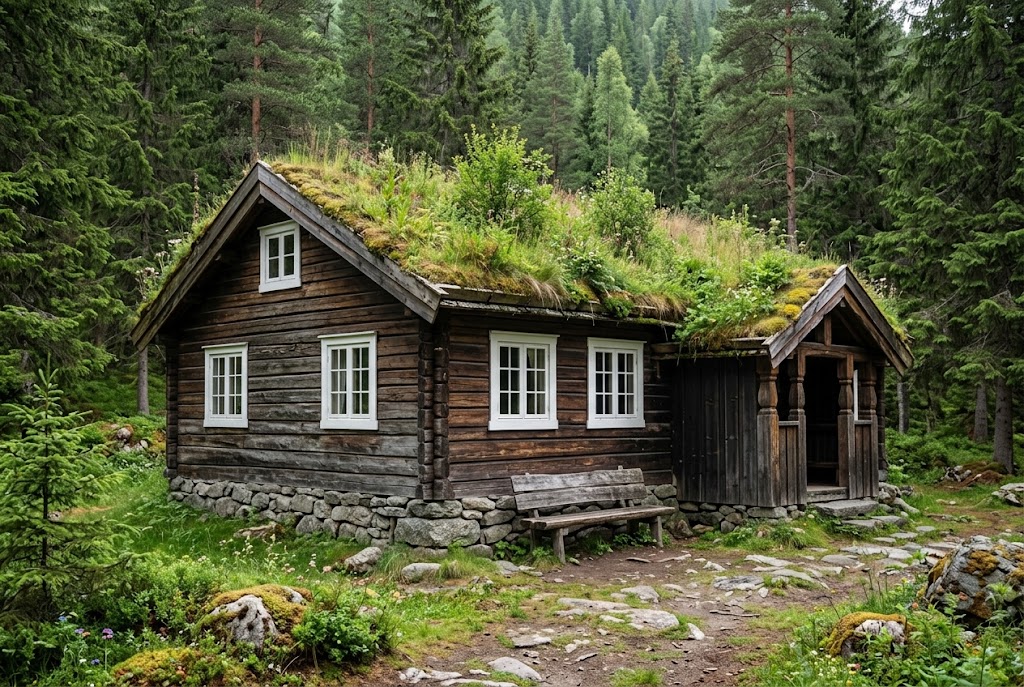
Grandpa’s final request brought our entire family back to a cabin we hadn’t visited in years. What I discovered inside sent my mother into a panic—and exposed why everyone else had thrived while I struggled.
When I was growing up, I was extremely close to my grandpa, Everett. Since my parents worked long hours, I spent most of my afternoons, weekends, and summer vacations with him.
I was heartbroken.
He taught me to fish, helped me with schoolwork, and listened whenever I needed to share my problems. In many ways, he was like a second father to me.
When he died at the age of 86, I was heartbroken.
Sadly, half the family seemed more concerned about his possessions than his passing. Relatives who had barely bothered to visit him suddenly wanted to know about his house, savings, and will.
He placed an old key in my hand.
So when Grandpa’s lawyer summoned us a few days after the funeral, everyone arrived remarkably quickly.
Instead of opening the will, however, he handed me an old key.
“Your grandfather left one final condition,” he explained. “Before anyone can hear the will, you must take the entire family to his old cabin.”
The lawyer gave a nod.
I looked at him in disbelief.
“Are you serious?”
The lawyer nodded.
My aunt immediately started complaining about the long drive, while my cousin wondered why we couldn’t simply read the will first.
My parents, though, responded in a completely different way.
“I’m afraid that’s not possible.”
“Everett wouldn’t have wanted everyone making such a big deal out of this,” Mom argued. “Nobody has been to that cabin in years.”
Dad stepped aside with the lawyer, but I could hear him asking if there was any legal way to avoid the visit.
“I’m afraid there isn’t,” the lawyer answered. “I’ll be coming with you to make sure his instructions are carried out.”
Mom and Dad exchanged a glance that made my stomach clench.
We headed to the cabin.
Everyone else seemed irritated about losing a Saturday. My parents, however, looked genuinely terrified.
I had no idea what was frightening them.
The next Saturday, we set off for Grandpa’s cabin.
Aunt Carol, Uncle Frank, and my cousin Brian arrived soon afterward. The lawyer was already standing beside his car when we got there.
The cabin looked even more neglected than I remembered. Weeds had taken over the path, and the wooden porch steps groaned beneath my feet.
“Everyone’s here.”
“Why don’t we stay outside and let you and the lawyer have a look around first?” Mom suggested.
“Grandpa specifically asked for everyone to come,” I reminded her.
“Everyone is here, sweetheart. That doesn’t mean we all need to enter the building.”
I ignored her and took the key from my pocket.
My breath stopped.
The lock wouldn’t turn at first, but after a little effort, it finally opened. Inside, I saw a large handmade board game spread across the dining table, surrounded by small wooden pieces and piles of cards.
But my attention quickly shifted to the wall at the back. It was plastered with photographs, receipts, and documents connected by red strings.
In the middle was a blown-up photograph of a badly wrecked car.
I knew that vehicle.
My breath caught in my throat.
I recognized the car immediately. I had been seven years old when rescuers pulled me out of it.
Before I could move any closer, Mom let out a scream.
“No! Shut the door! You mustn’t look at that!”
Dad seized her arm.
“Stop it!” he whispered angrily.
Her voice barely registered.
Aunt Carol hurried past me.
“What in the world is all this?”
I could barely hear her.
Photographs of my parents’ house, Uncle Frank’s business, Brian’s graduation, and various family holidays covered the wall around the picture of the wreck.
“Stop!”
“Everyone, please come inside,” the lawyer said in a composed voice.
Then I spotted a picture of myself as a little girl, taken just before the accident.
Beneath it, Grandpa had written a huge number in red:
$2,400,000.
I hadn’t seen that photograph in years, yet I could remember the accident as clearly as if it had happened yesterday.
It was all about the money.
I was seven when a driver ran a red light and crashed into our car. My parents escaped with bruises and minor injuries, but I suffered much more serious harm.
I sustained several broken bones and a spinal injury that required multiple operations and years of rehabilitation. Even today, changes in the weather can make my back ache.
According to my parents, though, the physical injuries weren’t the most devastating part of what happened.
I carried the guilt.
It was all about the money.
Throughout my childhood, I repeatedly heard that my parents had spent their savings on my medical treatment. Mom reminded me how much they had given up, while Dad complained about the holidays, larger house, and retirement plans they could no longer afford.
For years, I felt guilty about it.
When I couldn’t pay for the college I dreamed of attending, I enrolled at a less expensive local school and worked evening shifts. I was still struggling to repay my student loans.
I turned to Mom.
I never asked my parents to help me financially. I believed they had already sacrificed more than enough for my sake.
Now, with that enormous figure displayed beneath my childhood photograph, I faced Mom.
“What is that $2.4 million for?”
“That was the settlement,” she replied hurriedly. “Every penny went toward saving your life.”
The lawyer pointed toward the dining table.
Everyone remained still.
“Please, everyone, have a seat.”
At first, nobody moved. Eventually, Aunt Carol pulled out a chair, and the rest of us reluctantly sat down.
The board had been handcrafted, with wooden borders, cardboard squares, and tiny game pieces bearing our photographs. Across the top, I recognized Grandpa’s familiar handwriting.
WHO WANTS TO BE A MILLIONAIRE?
Someone had made the board by hand.
The squares featured houses, cars, businesses, universities, and holiday destinations. Several piles of cards were arranged beside the board.
The lawyer unfolded a letter.
“Your grandfather instructed me to read this to all of you.”
He cleared his throat before continuing.
“For years, this family has been playing a game using money that never belonged to them. I decided it was time for everyone to understand the rules.”
The squares featured houses.
Dad struck the table with his palm.
“My father was eighty-six years old. He obviously wasn’t thinking clearly.”
“Your father spent months putting this together,” the lawyer replied. “I assisted him in examining the financial records.”
He explained how the game worked. Each family member would draw a card describing a transaction, explain what they knew about it, and then listen to Grandpa’s conclusions.
“This is absurd.”
The will would be read only after everyone had finished playing.
“This is absurd,” Mom muttered under her breath.
I kept staring at the board.
“Why didn’t Grandpa tell me himself?”
“He wanted the entire family to hear the same facts at the same time,” the lawyer explained. “That way, nobody could later persuade you that you had misunderstood what happened.”
I continued staring at the board.
A deep sense of dread began to settle over me.
The lawyer reached for the first card.
“Aunt Carol,” he announced, “we’ll start with you.”
Reluctantly, Aunt Carol took the card. On its front was a photograph of her renovated kitchen, along with a date from fifteen years earlier.
$45,000.
Carol looked at the lawyer.
“What does my kitchen have to do with any of this?” she asked, forcing a nervous laugh.
“Do you remember where that money came from?” the lawyer asked.
“Of course. My sister lent it to us when Frank and I were having financial difficulties.”
The lawyer took a bank statement from a folder.
“That money was transferred directly from the account holding your niece’s settlement funds.”
“Do you remember where it came from?”
Carol stared at him in shock.
“What? Your mother told me it was money she’d inherited!”
Mom leaned forward immediately.
“Those were completely ordinary family arrangements. There’s nothing wrong with helping your relatives.”
“Whose money were you using?” I asked.
Brian frowned.
She turned her face away.
The lawyer shifted his attention to Brian.
His card featured a photograph of him wearing his graduation gown.
$68,000 — TUITION AND LIVING EXPENSES.
Brian’s expression tightened.
She turned away.
“My uncle helped pay for college. I thought he was simply doing something nice for me.”
I remembered working late shifts at a grocery store because my parents claimed they couldn’t afford my tuition.
“You used my money to attend college while I had to borrow money for mine?”
Brian’s face lost its color. “I swear I had no idea.”
Uncle Frank reached for his card next.
“It was a loan!”
$90,000 — BUSINESS INVESTMENT.
“That was a loan!” he protested. “I even paid some of it back!”
“You did,” the lawyer acknowledged. “However, those repayments went into your brother-in-law’s personal account rather than back into the settlement fund.”
Frank slowly turned toward Dad.
“What on earth have you done?”
By then, my hands were trembling.
Dad folded his arms.
I looked from one parent to the other. “How much of my settlement money did you give away?”
Dad crossed his arms defensively. “You’re all completely misunderstanding the situation.”
How much worse could it get?
The lawyer placed another card in front of Dad.
It showed the house we had moved into when I was ten years old—a beautiful four-bedroom property with a spacious backyard. Dad had always claimed he’d worked himself to exhaustion to afford it.
How far did this go?
Beneath the photograph, the card read:
$420,000 — HOUSE PURCHASE AND RENOVATIONS.
“What am I looking at?”
The lawyer opened another folder.
“A significant portion of the down payment came from your settlement account. The money used for the renovations three years later came from the same source.”
I stared at the documents.
“That can’t be true,” I whispered.
“There’s more to this.”
He spread out several bank statements, tracing transfers that had eventually paid for two cars, family holidays, investments, and credit card bills.
“Your father transferred the money between different accounts. Your mother authorized many of the withdrawals.”
I stared at the documents.
“We looked after you!”
When I was twelve, Mom told me we couldn’t afford to replace my worn-out rehabilitation equipment. The following year, Dad complained that another course of treatment was putting too much pressure on our finances.
That same year, they renovated the kitchen and purchased a new SUV.
Mom began to cry. “We were your parents! We looked after you!”
“Using my money?”
“That’s not fair!”
“We were entitled to something!”
Dad leaned toward me. “Do you have any idea what it does to a family to raise an injured child? We gave up everything!”
I struggled to believe what I was hearing.
“So you believed you had the right to spend my settlement money?”
“We were entitled to something!” he snapped.
The entire room fell silent.
Dad leaned forward.
I turned toward the lawyer.
“Was there anything left when I turned eighteen?”
He paused before answering.
“Very little. The financial records indicate that only a portion of the money was spent on legitimate expenses related to your care.”
Dad gave a dismissive scoff. “We were her legal guardians. We had every right to manage those funds.”
I looked at Mom.
“Looking after the money doesn’t mean you can use it for your own benefit,” the lawyer responded.
I glanced at Mom as she wiped the tears from her face.
Suddenly, everything became clear. I finally understood why she’d screamed when I opened the cabin door.
She wasn’t frightened by what Grandpa had left behind. She was terrified of what he’d uncovered.
I scanned the room. “Was there anyone in this family who didn’t take advantage of me?”
Grandpa Everett.
My gaze returned to the wall. There was one photograph we still hadn’t talked about.
Grandpa Everett.
Unlike the other pictures, his was linked to the photograph of the car accident with a white string.
Beneath his picture, Grandpa had written:
$80,000 — OFFER REFUSED.
“He turned it down?”
“What does that mean?” I asked.
The lawyer walked closer to the wall.
“Twenty years ago, your parents offered Everett eighty thousand dollars to renovate this cabin. They claimed they had covered all your medical costs and had money left over.”
I glanced around at the faded wallpaper and worn-out furniture.
“It belonged there.”
“He refused the money?”
The lawyer nodded before opening Grandpa’s notebook.
“I told them that money belonged to my granddaughter. Whatever remained after paying for her treatment needed to be kept for her future.”
Dad lowered his eyes toward the floor.
“You remember that?” I asked him.
My throat felt tight.
He let out a sigh.
“Yes. He wouldn’t accept it. He said you might need that money someday.”
My throat tightened further.
Grandpa had been concerned about my future while everyone else had been busy spending it away.
“He trusted your parents to manage the settlement properly,” the lawyer explained.
I looked puzzled.
He paused and glanced at the board.
“Roughly a year ago, Everett started investigating because of something you had told him.”
I frowned.
Then the memory came back to me.
I’d told him I was struggling to keep up with my student loan payments and was thinking about delaying another course of treatment because I couldn’t afford it.
Dad moved uneasily in his chair.
“He believed your settlement was meant to support you throughout your adult life,” the lawyer continued. “When he asked your father about the money, he was assured that it had all been spent on medical care.”
Dad shifted in his seat.
“But Everett remembered the house, the vehicles, and the renovations. He began questioning how your parents could have afforded those things.”
“So he hired you to investigate?” I asked.
They had examined the withdrawals.
“That’s correct. We started by reviewing property records and other documents available to the public.”
The lawyer described how they had compared the bank withdrawals against my actual medical bills, traced transfers made to relatives, and discovered transactions that raised serious concerns.
“Your grandfather confronted your parents before taking any further steps.”
Mom lowered her gaze.
I faced Dad.
“What did you say to him?” I asked.
“They refused to give him a complete account of the money. Your father told him, ‘She’s our daughter. How we manage our family’s money is none of your concern.'”
I turned toward Dad.
He remained silent.
I glanced around the cabin.
“Everett understood that they would never willingly admit what they’d done,” the lawyer continued. “That’s why he spent the final months of his life putting this game together.”
I looked around the cabin.
Grandpa and I had shared countless wonderful afternoons here, away from the tension and arguments of the rest of the family.
Even in his final days, he’d chosen the place that meant so much to us to protect me.
“I need to get out of here.”
I couldn’t bear to sit there any longer.
“I need to leave,” I whispered as I pushed my chair back.
“There’s one final card,” the lawyer said softly. “Your grandfather specifically instructed me to give it to you.”
He placed an envelope in my hands. My childhood photograph was on the front.
Inside was a handwritten letter.
My eyes filled with tears.
I immediately recognized Grandpa’s familiar handwriting, with its slightly crooked letters.
“You spent your entire life thinking you owed this family something. The truth is, they were the ones who owed you.”
My eyes blurred with tears.
“I never held you responsible for that accident, sweetheart. Not for the hospital expenses, not for the years of rehabilitation, and not for a single cent.”
“They were the ones who owed you.”
“I’ve always been proud of how hard you’ve worked. But now I wonder how much of that effort came from believing you needed to repay a debt that was never yours.”
“I’m sorry I didn’t uncover the truth earlier. Please don’t waste another day trying to earn affection from people who made you feel as though you owed them everything.”
By the time I reached the end of the letter, tears were streaming down my face.
I moved out of her reach.
Mom walked toward me with her arms open.
“Oh, sweetheart—”
I stepped back.
“You made me believe I had destroyed your lives.”
“I never intended for you to think that!”
Dad suddenly rose from his chair.
“You allowed me to believe it for thirty years.”
Dad jumped to his feet.
“That’s enough! Haven’t we all been through enough today?”
Something inside me finally broke.
“You went through enough?” I demanded. “You used the money I received after nearly losing my life to buy yourselves a house.”
The lawyer cleared his throat.
Dad tried to speak, but no words came out.
For the first time in my life, neither of my parents could offer an explanation.
The lawyer cleared his throat again.
“Your grandfather also arranged for an independent legal examination of the settlement. I’ve kept all the records, and there may be a legal basis for recovering some of the funds, depending on the relevant laws and applicable time limits.”
“I’ll return every cent.”
Aunt Carol immediately turned toward me.
“I’m truly sorry. I never knew where that money had come from. I’ll repay every cent.”
“I’ll do whatever I can to help,” Brian added. “I’ll cooperate if there’s an investigation.”
Uncle Frank folded his arms across his chest.
I remained silent.
“Wait a minute. I had no idea where the money came from. Why should I be held responsible for any of this?”
I said nothing. I couldn’t face dealing with them at that moment.
The lawyer then opened Grandpa’s will.
“Everett left his cabin, his house, his savings, and the remainder of his estate to his granddaughter. He wanted her to finally have the financial stability that had been taken away from her.”
“He didn’t leave anything to me?”
Dad sprang to his feet.
“What? I’m his son! He left me absolutely nothing?”
I looked at the photographs showing everything my parents had bought with my settlement money.
“You already received your inheritance. You simply took it from me thirty years ago.”
He hadn’t been responsible for the accident.
Dad stood there, unable to respond.
I turned toward Grandpa’s photograph, which remained connected to the picture of the wrecked car by that single white string.
He hadn’t caused the accident, and he hadn’t taken my future away from me.
Yet, somehow, he was the only person who had ever tried to give it back.