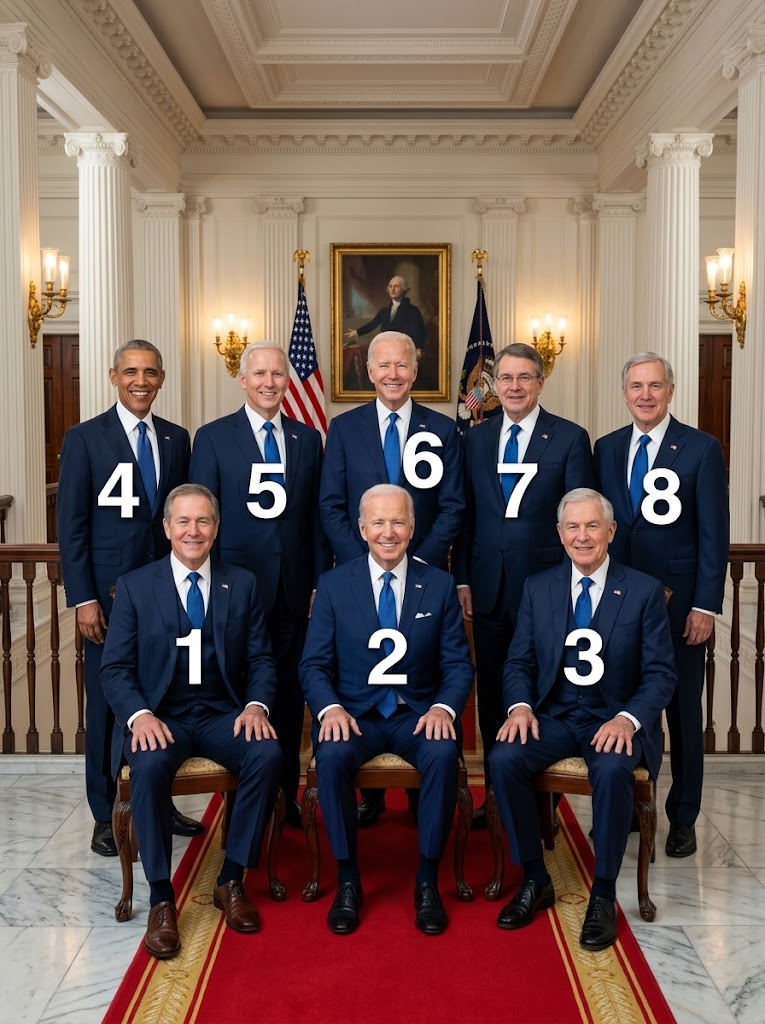
The 8 Most Recent U.S. Presidents
Historical summary · 1981–present · Updated October 2026
The eight most recent people to hold the office of U.S. president are presented below. Donald Trump appears only once in the chronological sequence of individuals, despite serving two separate, nonconsecutive terms. The order follows the official record of U.S. presidencies.
1. Ronald Reagan
1981–1989 · Republican
Key policies: Tax reductions, deregulation, higher defense expenditures, and a more confrontational approach toward the Soviet Union.
Major events: The concluding years of the Cold War, the 1986 tax reform legislation, and the Iran-Contra controversy.
Legacy: Reagan played a major role in shaping modern American conservatism. His supporters credit him with encouraging economic expansion and contributing to the outcome of the Cold War, while critics highlight growing budget deficits, concerns about inequality, and the Iran-Contra scandal.
2. George H. W. Bush
1989–1993 · Republican
Key policies: Building international partnerships and pursuing an active foreign policy.
Major events: The Berlin Wall’s fall, the dissolution of the Soviet Union, and the 1991 Gulf War.
Legacy: Bush led the country during a period of significant global transformation. However, an economic recession at home and his decision to reverse a campaign promise not to raise taxes damaged his political popularity.
3. Bill Clinton
1993–2001 · Democrat
Key policies: Reforming welfare programs, expanding international trade, and reducing the federal deficit.
Major events: The rapid growth of the internet economy, federal budget surpluses during the later years of his presidency, and his impeachment by the House of Representatives.
Legacy: Clinton’s administration experienced substantial economic growth and relatively low unemployment for much of the 1990s. Nevertheless, disagreements persist over his trade policies, financial deregulation, and the lasting consequences of welfare reform.
4. George W. Bush
2001–2009 · Republican
Key policies: Tax reductions, stronger homeland security measures, and military operations targeting terrorism.
Major events: The September 11 terrorist attacks, the wars in Afghanistan and Iraq, and the 2008 financial crisis.
Legacy: His administration significantly changed American national security policies and international relations. The Iraq War and the government’s response to the financial crisis continue to attract criticism and remain subjects of debate.
5. Barack Obama
2009–2017 · Democrat
Key policies: The Affordable Care Act, financial-sector oversight, and initiatives promoting clean energy.
Major events: Efforts to recover from the Great Recession, the operation that resulted in Osama bin Laden’s death, and the 2015 nuclear agreement with Iran.
Legacy: Obama expanded access to health insurance and helped steer the country toward recovery following the financial crisis. His administration also drew criticism for drone strikes, immigration enforcement practices, and the speed of the economic recovery.
6. Donald Trump — First term
2017–2021 · Republican
Key policies: Tax cuts, tariffs on selected imported products, reduced regulation, and tougher immigration restrictions.
Major events: The COVID-19 pandemic, two impeachments, the 2020 presidential election, and the January 6, 2021, assault on the U.S. Capitol.
Legacy: Trump transformed the Republican Party and significantly influenced national discussions about trade and immigration. His response to the pandemic, actions related to the 2020 election, and treatment of democratic institutions sparked considerable controversy.
7. Joe Biden
2021–2025 · Democrat
Key policies: Investment in infrastructure, incentives for semiconductor production, clean-energy support, and initiatives aimed at lowering certain prescription drug costs.
Major events: The economic recovery following the pandemic, elevated inflation, the U.S. military withdrawal from Afghanistan, and continued American assistance to Ukraine.
Legacy: Biden approved major legislation addressing infrastructure and domestic industry. His administration faced criticism over inflation, immigration along the southern border, the Afghanistan withdrawal, and questions surrounding his age and public performance.
8. Donald Trump — Second term
2025–present · Republican
Key priorities: Tougher immigration enforcement, tariffs, restructuring federal agencies, tax policy changes, and increased domestic energy production.
Major issues: The economic consequences of tariffs, immigration enforcement practices, changes to federal spending and staffing, and America’s relationships with both allies and geopolitical rivals.
Legacy so far: Trump’s second presidency remains underway, making a definitive assessment of its long-term consequences premature. His policies and their results should be judged according to current evidence rather than treated as settled historical conclusions.