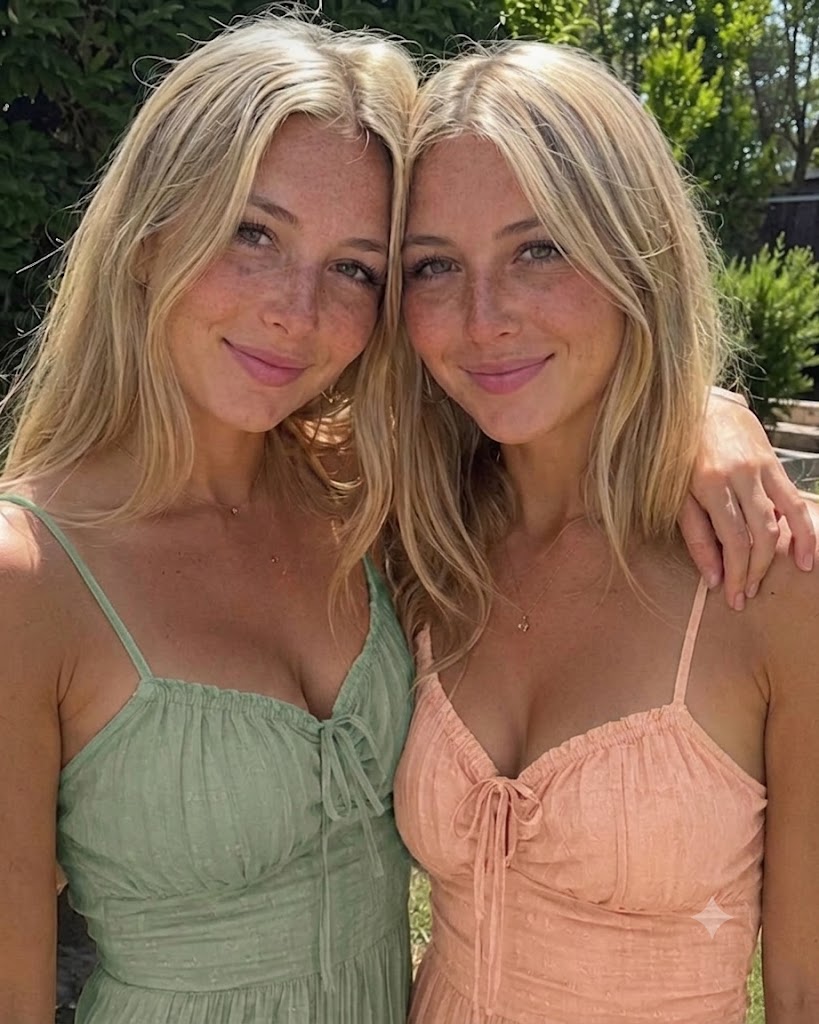
A month after my twin sister Ann’s funeral, the dust in her apartment settled over everything like a soft gray blanket. She had been gone for six months, but I still reached for my phone to call her every single morning. We were twins; people used to joke that we shared one heartbeat between us, and honestly, they weren’t far off.
I sat on the floor of her bedroom, surrounded by half-packed boxes, breathing in the fading scent of her perfume.
“You okay in there?” My mother’s voice drifted from the living room, where she was wrapping picture frames in newspaper.
“I’m fine, Mom,” I called back. “Just going through her nightstand.”
“Take your time, sweetheart. There’s no rush.”
But there was a rush inside me—a hollow ache that packing boxes couldn’t fill. I pulled open the bottom drawer and found a stack of old notebooks. Behind them, pushed against the back, sat a small wooden box I had never seen before. I lifted it out slowly. My name was carved into the lid in Ann’s careful lettering.
“Mom,” I said quietly. “Did Ann ever mention a box to you?”
“A box? Not that I can think of. Why?”
I didn’t answer. My hands were already opening it. Inside lay a neat stack of five sealed envelopes. Every single one had my name written on the front in Ann’s unmistakable handwriting.
“Mom. There are letters in here. For me.”
I heard her footsteps stop. “What kind of letters?” Her voice had changed, tighter now, careful.
“I don’t know yet.” I picked up the first envelope. “She sealed them all. Why would she write me letters and hide them?”
There was a long silence from the other room. “Maybe you should wait,” Mom finally said. “Wait until you’ve healed a little more. Grief makes everything harder to read.”
“I’ve waited six months, Mom. I can’t wait anymore.”
“Please, honey. I just think—”
“You think what?”
She didn’t finish. She appeared in the doorway instead, her face pale.
“I think some things are better left in the past,” she said softly.
I stared at her, confused by the fear in her eyes. “What things? These are letters from Ann. What could possibly be in them that would scare you?”
“Nothing,” she said too quickly. “Nothing at all. I just don’t want you hurting more than you already are.”
I looked down at the envelope in my hands. My fingers had started to tremble. “I need to read them,” I told her. “Ann wanted me to. She wrote my name on every one.”
Mom opened her mouth, then closed it. She turned and walked back toward the boxes without another word. Something about her silence unsettled me more than any argument could have.
I slid my finger under the flap of the first envelope and pulled out a single folded page. The paper was worn at the edges, as if she had handled it many times.
The first line read: If you’re reading this, it means I can’t protect you anymore. There’s something about our family you deserve to know. I’ve carried this for years, and I hated every day of it. But you’re stronger than everyone thinks. So here is the truth.
The words blurred as my eyes filled.
Dad isn’t our biological father.
I almost stopped reading right there. It felt impossible that anything could be bigger than those words.
“Mom?” I called, my voice barely working. “Mom, what is this?”
She didn’t come back this time. I stared at the elegant handwriting on the first envelope. The words on the page threatened to erase the only father I had ever known. But if that had been the whole secret, Ann wouldn’t have needed five letters.
The second envelope slid open easier than the first. My hands still shook, but now grief and confusion tangled into something sharper. Ann’s handwriting filled the page in that careful slant I would know anywhere.
I found out during a medical screening two years ago. They flagged something in my blood type. I asked questions I should have left alone. The results didn’t lie. Yours wouldn’t have matched Dad’s either. I’m sorry. I carried it so you wouldn’t have to.
I pressed the letter to my chest. Two years. She had known for two years and never let it show. Every laugh we shared after that, every late-night phone call, she had been holding this alone. Tears slid down before I could stop them. My heart pounded as I reached for the third letter almost against my will. If Letter One had shattered my past, what could possibly be left to explain?
When I told Mom what I’d learned, she cried harder than I’d ever seen her cry. She begged me not to tell you. You have to understand her reasons. It wasn’t about hiding her shame. It was about you. You were always the sensitive one. Mom said you spent your whole childhood terrified you didn’t belong. She thought the truth would break you.
I closed my eyes and traced the words with my finger. I remembered being seven, crying because I looked nothing like Dad. Mom had held me until I fell asleep. I had forgotten that, but she never had. She wasn’t protecting a secret; she was protecting the little girl who was scared of being unwanted. My chest ached with a grief that had nowhere to go. Except… Ann still wasn’t finished. There were two unopened envelopes beside me. Whatever she thought mattered most, she hadn’t told me yet.
Before I could open the fourth letter, someone knocked. Looking back, I don’t think that timing was a coincidence. I wiped my face fast and shoved the letters back into the wooden box.
“I know you’re in there,” a voice called.
Uncle Greg.
I opened the door. Mom was nowhere to be seen; she must’ve stepped out when I said I was going to read the letters. Uncle Greg stepped inside without waiting for an invitation, glancing around Ann’s apartment like he was appraising it.
“You’ve been crying,” he observed. “Understandable. But we need to talk business.”
“Now?” I asked. “We’ve only just started going through her stuff…”
“Which is exactly why the estate needs settling,” he replied. “Your grandmother’s trust, the property, all of it.” He set a folder on Ann’s table like it belonged to him. “I brought papers. You sign over your share, and this all goes smoothly for everyone.”
“Why would I sign that?”
Greg smiled, but it never reached his eyes. “Because, sweetheart, we both know something the rest of the family pretends not to.”
My stomach turned cold. “What are you talking about?”
“I’m talking about your father,” he said softly. “Or the man you call your father. I’ve always known. Your mother wasn’t as careful as she thought. I kept quiet out of respect.” He tapped the folder. “Respect has limits. This estate belongs to blood. And you, my dear, are not.”
“Ann never said a word about you knowing,” I whispered.
“Ann was sentimental,” he replied. “She protected you. I’m more practical.”
“You have no right to this money,” I said. “None of us are supposed to touch it until the will is read.”
“The will can be contested,” Greg countered smoothly. “Especially when there are questions about who truly belongs in this family.” He leaned closer, lowering his voice. “Sign, and no one ever hears the truth. Refuse, and I’ll say it out loud. At the dinner. In front of everyone. Are you listening, or do I need to repeat the terms?”
I looked up at him. Uncle Greg had me backed into a corner, but I thought of Ann spending years carrying this alone to spare me, and I thought of Dad.
“I heard you,” I said. “Every word. Sign over my share, and you keep quiet about my father.”
“Then we understand each other.”
“We don’t. You’ve said your piece. Now I’ll say mine.” His smile faltered by a fraction. “You’ve had this information for years. Why wait until now to use it?”
Greg shrugged. “Because now there’s something worth taking. Ann’s gone. Your mother’s fragile. Your so-called father is sentimental and weak. You’re the last loose thread.”
“Don’t call him that.”
“Call him what? A father?” He laughed. “He isn’t. Blood is blood. And you don’t have his.”
I felt the old fear rising—the childhood terror of being exposed and cast out. But something else rose with it.
“You think this is your winning card,” I said. “You think shame will make me disappear.”
“It always does.”
“Not this time.”
He stopped smiling. “You’re being foolish. One announcement and every relative in that room turns on you.”
“Then let them turn.”
His jaw tightened. “So you’ll throw away your inheritance? Over pride?”
“Over the truth. There’s a difference.”
For a moment he simply stared at me, recalculating. Then he smiled. “I guess we’ll find out on Sunday, when I call your bluff by letting everyone know the truth.” He moved toward the door, pausing at the threshold. “Ann isn’t here to save you anymore. Neither is anyone else.”
“Then I’ll save myself.”
He left without another word. I locked the door and leaned against it. I had refused him and the fear that had ruled me, but I still hadn’t opened Letter 5, and Sunday was coming fast.
I carried Letter 5 with me for the next two days, tucked safely inside my purse. I reached for it more times than I could count, but every time, I stopped. Some part of me wasn’t ready for the last thing my sister ever wanted me to know.
Then Sunday came.
We’d barely all sat down for dinner when Greg made his move. The dining room fell silent as he rose to his feet.
“Since we’re all here, someone should say what everyone whispers.” He jabbed a finger toward me. “She isn’t Robert’s real daughter.”
Eyes turned toward me. He waited for me to crumble. I set down my fork and stood.
“You’re right,” I said, steady and clear. “Dad isn’t my biological father.”
A gasp rippled around the table. Uncle Greg smirked, certain he had won.
“But you got one thing wrong, Greg. That word, ‘real,’ doesn’t mean what you think it means. Being a ‘real’ parent has nothing to do with biology.”
“It means the inheritance goes to blood,” he snapped. “Not to outsiders.”
“Then take it,” I replied. “Every cent. I don’t want a single dollar you have to steal from a grave. I lost my sister; I’m not going to lose the man who raised me over money. You can have the estate. You’ll never have what I have.”
Uncle Greg looked around for support and found only lowered eyes. Muttering, he grabbed his coat and slunk toward the door, defeated by my refusal to be ashamed.
I waited until I was certain he was gone, then I broke. Tears poured down my face as I ran from the room and out into the cool night air.
Dad found me crying and pulled me close.
“You heard Greg,” I whispered. “I’m not really yours.”
He held me tighter. “You have always been my daughter. You and Ann both. Nothing written on any paper could ever change that.”
For the first time in six months, I finally let myself grieve.
That night, alone in my room, I finally opened Letter 5.
He knows. Dad has always known. He chose you before you were ever born, and he made sure no one could ever take your future away.
I found the documents folded inside. Years ago, Dad had legally secured everything in my and Ann’s names. Greg’s threats had been powerless from the start—he just didn’t know it.