The landscape of British Columbia is defined by its rugged, breathtaking beauty, but that same geography can turn treacherous with terrifying speed. In late 2021, the southern region of the province faced an unprecedented environmental crisis as extreme rainfall triggered a series of catastrophic floods and landslides. Among the most devastating sites was a stretch of Highway 99, known as Duffey Lake Road, near the town of Lillooet. What began as a routine passage through the mountains for travelers quickly became a scene of profound tragedy, as a massive mudslide swept across the asphalt, burying vehicles and forever altering the…
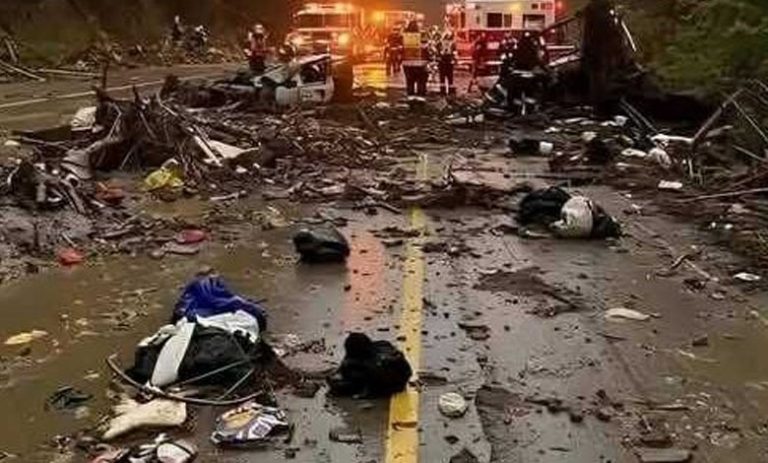
The landscape of British Columbia is defined by its rugged, breathtaking beauty, but that same geography can turn treacherous with terrifying speed. In late 2021, the southern region of the province faced an unprecedented environmental crisis as extreme rainfall triggered a series of catastrophic floods and landslides. Among the most devastating sites was a stretch of Highway 99, known as Duffey Lake Road, near the town of Lillooet. What began as a routine passage through the mountains for travelers quickly became a scene of profound tragedy, as a massive mudslide swept across the asphalt, burying vehicles and forever altering the lives of several families.
The recovery operation following the slide was a grueling, multi-day effort characterized by hazardous conditions and emotional weight. Search-and-rescue teams, working alongside the RCMP and the BC Coroners Service, faced a landscape that had become fundamentally unstable. The debris field was a chaotic mixture of heavy saturated earth, fractured trees, and twisted metal, all resting on a slope that remained vulnerable to further movement. Despite these challenges, the mission remained focused on bringing answers to the families of those who had vanished when the mountainside gave way.
The first confirmation of the disaster’s human cost came on a Monday, when the body of a woman was recovered from the slide area. She represented the first confirmed fatality of the broader weather event that had paralyzed much of the province. Her recovery set a somber tone for the week, as authorities held out hope for the four other individuals reported missing in the same vicinity. However, as the days progressed, the news shifted from rescue to recovery.
On Wednesday, search teams located the body of one man within the debris. The following day, Thursday, two additional men were found. These discoveries were the result of exhaustive efforts by crews who used specialized equipment and canine units to probe the dense mud. By Saturday, B.C. Chief Coroner Lisa Lapointe issued a formal statement confirming that three men had been retrieved from the site near Lillooet, bringing the total number of confirmed deaths at this specific location to four.
The weight of these losses was felt deeply across British Columbia. Chief Coroner Lapointe’s announcement was not merely a presentation of facts, but a heartfelt acknowledgement of the suffering endured by the victims’ kin. She extended her deepest condolences to the families grieving the sudden and unexpected loss of their loved ones. Her words reflected a province in mourning, noting that it had been an incredibly challenging year for all residents of B.C., who had navigated a series of environmental and social trials. The role of the Coroners Service in these moments is vital; they serve as the official record-keepers of tragedy, striving to ascertain the truth of what happened to provide a measure of closure for the living and to develop recommendations that might prevent similar fatalities in the future.
While four bodies were recovered, the story remained tragically incomplete. A fifth individual, a man who had been traveling the highway when the slide struck, remained unaccounted for. Throughout Friday, teams pushed their resources to the limit, scouring the remaining accessible areas of the slide. However, the search was eventually hampered by the very elements that had caused the disaster. Adverse weather moved back into the region, and the site conditions became too dangerous for personnel to continue. B.C. RCMP Staff Sgt. Janelle Shoihet indicated that the search for the final missing person had been significantly hindered by these factors, leading to a difficult decision.
When all viable search avenues were exhausted, the active recovery efforts were concluded. The decision to stop a search is never made lightly; it is a calculation of safety, probability, and the physical limits of the terrain. Discussions remain ongoing between various agencies to determine how to proceed, but for the time being, the fifth man remains a part of the mountain. The highway itself, a critical artery through the interior, remains closed to all motorists. There is no clear timeline for when the road will be cleared and deemed safe for travel, as engineers must first assess the long-term stability of the slopes above Highway 99.
The identification process for the three men recovered later in the week is a meticulous task. Authorities are working with forensic experts to confirm identities with absolute certainty before officially notifying the next of kin. For the families, this period of waiting is an agonizing bridge between the hope of a miracle and the finality of grief. The suddenness of the event—a drive on a highway turned into a fatal encounter with nature—serves as a stark reminder of the volatility of the natural world.
This tragedy near Lillooet is a microcosm of a much larger story of resilience and vulnerability. The southern region of British Columbia has seen its infrastructure tested to the breaking point, with highways severed and entire communities cut off by rising waters. The Duffey Lake Road slide stands out as one of the most lethal points of impact. It highlights the necessity of robust emergency response systems and the bravery of those who step into disaster zones to perform the somber task of recovery.
As the province begins the long process of rebuilding its roads and bridges, the memory of those lost in the mudslide remains at the forefront of the public consciousness. The facts surrounding these tragedies are being gathered into the public record, not just as statistics, but as a tribute to the lives cut short. The goal of the BC Coroners Service to provide recommendations for the future is perhaps the most meaningful way to honor the victims. By studying the mechanics of the slide and the circumstances of the fatalities, experts hope to implement better early-warning systems or structural reinforcements that could save lives when the next extreme weather event inevitably arrives.
For now, the silence at the slide site is a heavy one. The mountain has reclaimed a portion of the road, and with it, the lives of five individuals who were simply trying to reach their destinations. The community of Lillooet, the search teams who labored in the mud, and the families left behind are all united in a shared experience of loss. While the active search has ended, the work of mourning and the quest for understanding continue. The story of the Highway 99 mudslide is a testament to the fact that even in our modern, connected world, we are still subject to the overwhelming power of the earth, and our greatest strength lies in the compassion we show to those who suffer in the wake of its fury.