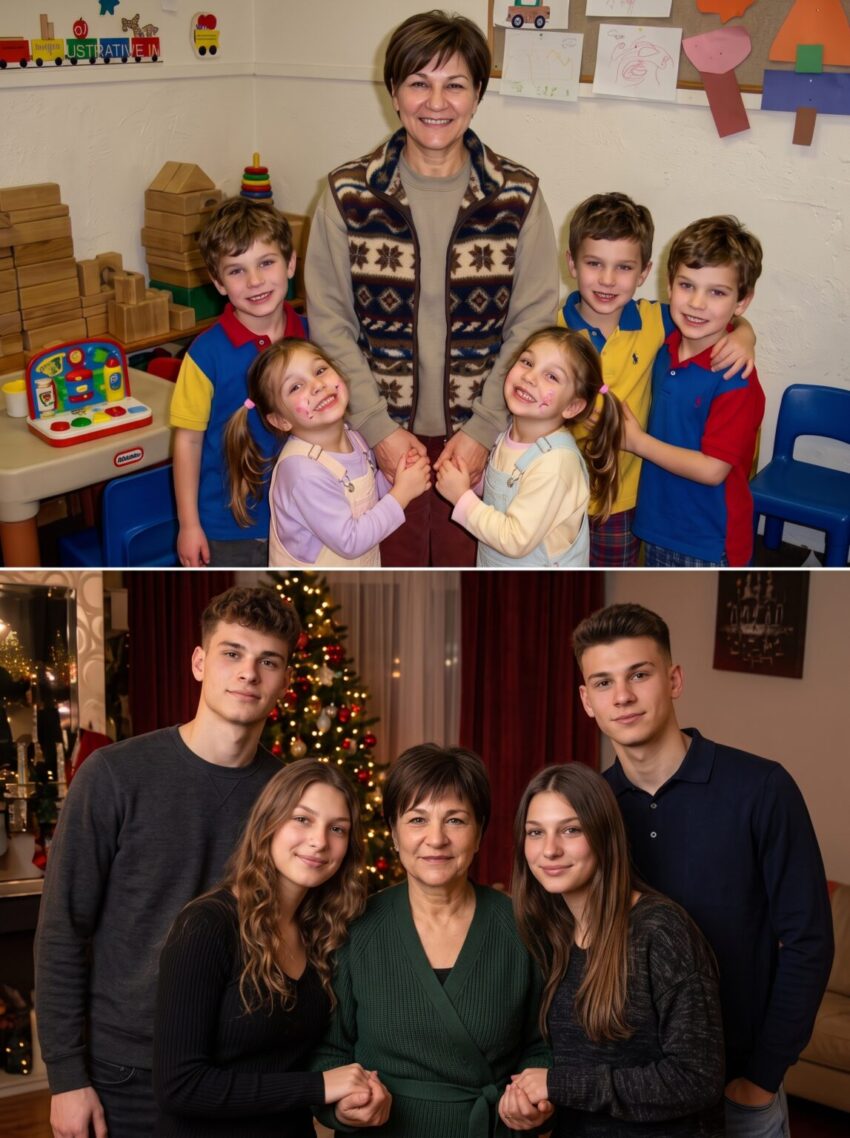
The Quiet House on Briar Lane
When I first moved to Briar Lane, I thought the little house beside mine was empty.
It was too tidy to be abandoned, of course. The porch was swept every morning. The curtains were always open before sunrise. In the summer, bright marigolds bloomed in clay pots under the front window, and in winter, those same pots sat neatly in a row, waiting patiently for spring.
Still, I never saw anyone leave.
I never saw anyone arrive.
The house had a silence around it that made people lower their voices when they passed by.
Then, on my third morning in the neighborhood, I dropped a box of dishes on my front steps.
The cardboard split open. My grandmother’s old soup bowls tumbled across the porch, and one of them shattered near my shoe.
Before I could even react, a soft voice called from next door.
“Don’t move, honey. There’s glass by your foot.”
I looked up and saw a small woman hurrying toward me in a pale yellow cardigan.
That was the first time I met Miranda.
She was sixty-three then, with silver hair pinned carefully behind her head and kind eyes that seemed to notice everything. She helped me gather the broken dishes, shook her head sadly over the chipped bowls, then insisted I come inside and have tea.
“I’m Irina,” I told her, still embarrassed by the mess.
“Miranda,” she said warmly. “And if anyone on this street gives you trouble, you come straight to me.”
I laughed because she looked too gentle to scare anyone.
Then she lifted one eyebrow and said, “I mean it.”
By the end of that week, I understood why everyone on Briar Lane loved her.
Miranda had spent thirty years working at the town daycare. People said she had practically raised half the neighborhood. Grown men still called her “Miss Miranda.” Mothers stopped her at the grocery store to hug her. Teachers, nurses, mechanics, and cashiers smiled like children again whenever they saw her.
But whenever people talked about her, their voices changed.
They softened.
They looked toward her quiet little house as if it held something precious and painful at the same time.
A Widow Who Gave Her Life to Other People’s Children
Miranda’s husband had died when she was still young.
His name was Pavel.
One stormy evening, when the power went out and we sat together in her kitchen by candlelight, she showed me his photograph. He was standing beside her with his arm around her waist, smiling as if the whole world belonged to them.
“He was twenty-eight,” Miranda whispered. “I was twenty-five. We thought we had forever.”
I did not know what to say.
I had moved to Briar Lane after my divorce, carrying my own sadness in boxes and folders. But Miranda’s grief felt deeper, older, and quieter than anything I had known.
“I’m so sorry,” I said.
She touched the edge of the photograph before placing it back on the shelf.
“Everyone is sorry, sweetheart,” she said. “But sorrow doesn’t pay rent. Babies still need bottles. Life keeps asking things of you, even when your heart is broken.”
After Pavel died, Miranda had almost nothing.
No savings.
No close family nearby.
No one to rescue her.
So she took a low-paying job at the local daycare because she needed work, and the daycare needed hands.
“I didn’t have time to fall apart,” she once told me. “Children don’t wait for you to heal. They still need to be fed, changed, comforted, and loved.”
And that was exactly what she did.
For thirty years, Miranda gave her life to children who were not hers—at least, that was what everyone believed.
She tied shoes, warmed bottles, wiped tears, buttoned tiny coats, washed plastic cups, sang lullabies, and carried sleepy toddlers until her arms ached.
She never complained about the long hours.
She never complained about the small paycheck.
She never complained about coming home to an empty house after spending all day surrounded by children.
I complained for her.
“You should have asked for more,” I told her once while helping her put groceries away. “More money. More rest. More help.”
She smiled and slid a carton of eggs into the fridge.
“Irina, I’m not taking life advice from a woman who thinks coffee counts as dinner.”
“It does if you add milk,” I said.
“It absolutely does not.”
That was Miranda. Gentle, sharp, funny, and wounded in places she rarely let anyone see.

The Four Children She Never Forgot
There were four children Miranda talked about more than anyone else.
Two sets of twins.
Olive and Olena.
Harry and Hayden.
At first, I thought they were simply children she had loved at the daycare. Special favorites, maybe. Every teacher has them.
But over time, I realized they were something more.
Whenever she said their names, her face changed.
Olive was the bold one, Miranda told me. She climbed too high, ran too fast, and insisted she was never afraid, even when tears were already shining in her eyes.
“Olive would march into a room like she owned the building,” Miranda said once, smiling into her tea.
“And Olena?” I asked.
“Olena would come right behind her apologizing for the noise.”
Olena had been soft-hearted, the kind of child who shared her crackers and cried if someone stepped on an insect.
Harry had been serious even as a toddler. He lined up toy cars by color and frowned if anyone touched them.
Hayden was the opposite—curls, dimples, mischief, and a talent for getting into places no child should fit.
“One afternoon,” Miranda said, laughing, “I found Hayden sitting inside a laundry basket with a stolen banana.”
“How old was he?”
“Three.”
“That sounds impossible.”
“Not for Hayden. That boy could escape anything with a spoon and a smile.”
When Miranda spoke of them, her whole face lit from the inside.
They were not just children she had cared for.
They were the place where her love had gone after grief took Pavel from her.
Miranda never had children of her own.
At least, that was what I believed.
Once, I asked her gently about it.
She looked out the window toward the old maple tree and said, “Not in the way people usually mean.”
Then she added, almost to herself, “But I had children in the ways that mattered.”
I never asked again.
The Loneliness Everyone Saw But No One Fixed
Years passed.
The children Miranda had cared for grew up. Families moved away. The daycare eventually closed, and a bright, expensive preschool opened across town.
The old daycare building became a dental office.
Miranda pretended she did not mind, but I noticed how quiet she became whenever we drove by.
“That window used to be the nap room,” she told me once. “Olena hated naps. She used to whisper stories to the ceiling until the other children fell asleep.”
Her voice went thin, and I changed the subject because I did not know how to hold that sadness for her.
After the daycare closed, Miranda’s world became smaller.
Her house stayed clean. Her porch stayed swept. Her marigolds still bloomed every summer.
But the silence around her grew heavier.
I became part of her routine, and she became part of mine.
I brought her soup when her arthritis hurt. She watered my plants when I traveled. We watched old movies on Friday nights, though she always fell asleep halfway through and later insisted she had only “rested her eyes.”
She left muffins on my porch when she knew I had been crying.
She scolded me for burning toast.
She corrected my posture like I was still a child.
I loved her for all of it.
The whole town loved Miranda too, but in that distracted way people love good people.
They waved.
They smiled.
They remembered her at Christmas.
They said things like, “We really should visit Miss Miranda more often.”
Then life pulled them away.
I was guilty of it too.
I told myself Miranda understood.
I told myself she was used to being alone.
Looking back, I hate how easy it was to mistake her strength for not needing anyone.
The Phone Call Before Her Birthday
One week before Miranda’s birthday, everything changed.
I was outside trimming a stubborn hedge when I heard her gate open.
“Irina!”
Her voice sounded brighter than I had heard it in years.
I turned and saw her standing on the sidewalk in her blue dress with the tiny white flowers, clutching her phone against her chest.
“What happened?” I asked.
Her cheeks were pink. Her eyes were shining.
“They called,” she whispered.
“Who?”
“The twins.”
I froze.
“Olive and Olena. Harry and Hayden. They called me.”
For a moment, all I could do was stare at her.
Then I dropped the garden shears and hurried toward her.
“Miranda, that’s wonderful!”
She laughed, but tears were already gathering in her eyes.
“They remembered my birthday. After all these years, they remembered. They said they’re coming here to celebrate with me.”
Her voice broke on the last word.
I wrapped my arms around her carefully, afraid she might crumble from happiness.
“I told them not to make a fuss,” she said, wiping her eyes. “I told them I’m old now and they didn’t need to drive all this way. But Olive said, ‘Miss Miranda, you don’t get to argue with us this time.’”
I smiled through my own tears.
“That sounds like Olive.”
The news spread down Briar Lane before sunset.
Mrs. Albright offered to bake lemon bars. Suri wanted to decorate the porch. Desmond from number fourteen grumbled that birthdays were too much trouble, then immediately offered to bring folding chairs.
Everyone was happy for Miranda.
After all her years of giving, it felt like the world was finally giving something back.
Miranda tried to act calm, but she cleaned her windows twice. She pressed her tablecloth. She bought four kinds of tea because she could not remember which kind the twins had liked as children.
“They’re adults now,” I reminded her gently.
“I know,” she said, rearranging wrapped candies in a bowl. “But people keep little pieces of who they were. Harry liked peppermint. Or maybe that was Hayden. No, Hayden tried to eat a crayon.”
“Maybe don’t serve crayons.”
She gave me a look.
“Very funny.”

The Morning the Whole Street Waited
On the morning of Miranda’s birthday, Briar Lane seemed to wake earlier than usual.
By seven, I saw Suri tying ribbons to Miranda’s porch railing.
By eight, Mrs. Albright arrived with lemon bars wrapped in foil.
By nine, Desmond was carrying chairs across the street, muttering that no decent celebration should begin before breakfast.
Then Miranda opened her door.
She wore the blue dress again, but this time she had added a pearl necklace I had never seen before.
“Pavel gave me these,” she said when I complimented her. “Our second anniversary.”
“You look beautiful,” I told her.
She touched her hair nervously. “I look terrified.”
“You look loved.”
Her eyes filled, so I pretended to fix a ribbon that did not need fixing.
By ten o’clock, half the neighborhood had found excuses to be outside.
People checked mailboxes that were empty. They swept sidewalks that were already clean. They watered flowers that had been watered twice.
No one wanted to intrude.
But no one wanted to miss the moment either.
Miranda stood just inside her doorway, peeking through the lace curtain every few minutes.
Then a sleek black car turned onto Briar Lane.
It looked out of place on our cracked little street, polished and dark, reflecting the small houses like a mirror.
The engine stopped.
For one strange moment, nobody moved.
Then the doors opened.
Two women stepped out first.
One stood tall and confident, her shoulders squared. The other paused beside the car, staring at Miranda’s house as if she needed courage before taking another step.
Olive and Olena.
Then came the men.
One buttoned his jacket as soon as he stood. The other ran a hand through his hair and looked up and down the street with restless eyes.
Harry and Hayden.
I expected flowers.
A cake.
Maybe a bright birthday gift.
But they carried none of those things.
Instead, one of the men held an old legal envelope.
Something inside me tightened.
Miranda opened the door before they could knock.
For half a second, joy covered her face completely.
Then she saw the envelope.
All the color drained from her cheeks.
She did not look surprised.
She looked afraid.
The Envelope From the Past
The man with the envelope stepped forward.
“You remember this, don’t you?” he asked.
His voice was not loud, but every person on Briar Lane seemed to hear it.
Miranda gripped the doorframe.
Her knuckles turned white.
“Harry,” she whispered.
At the sound of his name, his stern expression cracked for just a second.
I stepped closer without meaning to.
“Miranda?”
She glanced at me, and the fear in her eyes stopped me cold.
“Please,” she said.
I did not know whether she was speaking to me or to them.
Harry pulled a stack of yellowed papers from the envelope. The pages were creased, worn, and old enough to look fragile.
“We found this in their safe deposit box,” he said.
Miranda flinched.
Olive’s voice shook when she spoke.
“After our parents died, we had to go through everything. Bank records, insurance papers, old documents. We thought this was just another legal file.”
Hayden stared at the porch floor.
“Our parents,” he repeated quietly, as if the words hurt.
Olena’s eyes were already full of tears.
“Then we saw your name.”
The whole street went silent.
Miranda seemed to shrink inside her birthday dress.
“I never wanted you to find out this way,” she whispered.
Olive’s face twisted with pain.
“This way?” she asked. “We grew up calling you Miss Miranda.”
Miranda closed her eyes.
And in that moment, I understood.
The story we all knew had only been half the truth.
Harry unfolded the old contract and read from it.
“This agreement prohibits Miranda from disclosing any biological relation to the adopted minors. Any violation shall result in termination of employment, loss of visitation access through the daycare, and financial penalties.”
A stunned sound moved through the neighbors.
Biological relation.
The words landed like thunder.
Miranda had once told me she never had children of her own.
Not in the way people usually mean.
Now I understood what she meant.
The Truth Miranda Had Carried for 30 Years
Olena stepped forward, crying openly now.
“We read it over and over,” she said. “We kept thinking it couldn’t be real.”
Hayden finally lifted his eyes.
“Were we yours?” he asked.
Miranda’s face crumpled.
She covered her mouth with both hands.
For a second, she no longer looked like the careful old woman who swept her porch every morning.
She looked young.
Terrified.
Alone.
“Yes,” she breathed. “God forgive me. Yes.”
Olive made a small sound, but she stayed standing.
Harry’s hand tightened around the pages.
“Why?”
That single word seemed to break something open inside Miranda.
I hurried to her side because I thought she might fall.
She let me hold her elbow.
“Because Pavel died,” she said, her voice shaking. “Because there was no money. No family close enough to help. No time to grieve. I had babies to feed and rent to pay, and some days I was so exhausted I could barely remember my own name.”
No one moved.
“I tried,” she continued. “Please believe that. I tried everything. I sold my wedding ring. Then the furniture. I stretched soup until it was almost only water. I went to churches. Offices. Neighbors. Anyone I thought might help. But I was young, broke, widowed, and completely alone.”
Olena sobbed into her hands.
Miranda looked at each of them like she was afraid they might vanish before she finished speaking.
“The family who adopted you had money. A warm home. Doctors. Schools. Everything I could not give you then.”
“And they made you sign this?” Harry asked.
Miranda nodded.
“They offered me the only thing I wanted more than my pride. A way to stay near you.”
Her voice broke.
“Your adoptive mother knew the daycare needed workers. She said if I signed the papers, they would enroll you there. All four of you. I could hold you when you cried. I could feed you. I could watch you grow. But I could never tell you who I was.”
Olive whispered, “They bought your silence.”
Miranda shook her head, tears falling freely.
“No. They bought my fear. My silence came from loving you more than I loved myself.”
That sentence broke every heart on that street.
Mrs. Albright began crying into the foil covering her lemon bars.
Suri pressed both hands over her mouth.
Desmond turned away, but not before I saw him wipe his eyes.

The Lullaby They Never Forgot
Olena took another step closer.
“I used to wonder,” she whispered. “I used to wonder why I felt safer with you than with anyone else.”
Miranda trembled.
“I sang to you,” she said. “All of you. The same lullaby Pavel sang the night before he died. I thought if I could give you that much, maybe some part of your father would stay with you.”
Hayden let out a broken laugh through his tears.
“I remember that song.”
Miranda looked stunned.
“You do?”
He nodded.
“I didn’t know where it came from. I only knew it made me feel like I belonged somewhere.”
Harry looked down at the contract again.
For the first time, anger crossed his face.
But it was not anger at Miranda.
“They threatened you,” he said.
“Yes.”
“They threatened to take us away from the daycare.”
“Yes.”
“They made sure you could lose us a second time if you told the truth.”
Miranda pressed a fist against her heart.
“I was a coward.”
“No,” Olive said sharply.
Everyone looked at her.
She stepped onto the porch, her eyes wet but fierce.
“No. You were trapped.”
Harry moved beside her.
Then Olena.
Then Hayden.
The four of them stood in front of the woman who had loved them in silence for thirty years.
Harry lifted the contract.
“We came because we needed to hear the truth from you,” he said. “But we also came to end this.”
Miranda’s breath caught.
“Harry, don’t. I don’t know what that paper still means. I don’t know what they put in there.”
“They’re gone,” Harry said. “Their threats are gone too. We talked to an attorney. This has no power over you anymore.”
Olena reached for one corner of the contract.
Olive took another.
Hayden gripped the bottom edge.
Together, all four of them tore it in half.
The sound was small.
Just paper ripping in the morning air.
But somehow, it felt louder than thunder.
They tore it again.
And again.
Yellowed pieces drifted down onto Miranda’s porch like dead leaves.
The Word She Had Waited a Lifetime to Hear
Miranda stared at the torn pages, one hand over her mouth.
Harry stepped forward.
For the first time since he arrived, his face softened completely.
Then he said the word that changed everything.
“The secret is over, Mom.”
Mom.
Miranda stumbled as if the word had struck her heart.
I caught her for only a moment before all four of them reached for her at once.
Olive wrapped her arms around Miranda’s shoulders.
Olena collapsed against her side, sobbing.
Hayden bent his head into her silver hair like a lost child finally home.
Harry held all of them together, his eyes squeezed shut.
And Miranda made a sound I will never forget.
It was not ordinary crying.
It was thirty years of grief leaving her body.
“My babies,” she sobbed. “My beautiful babies.”
“We’re here,” Olena cried. “We’re here now.”
“I loved you every day,” Miranda said. “Every single day. I never stopped loving you.”
“We know,” Harry whispered. “We know now.”
That was when the whole street began to cry.
Mrs. Albright set the lemon bars on the porch steps and hugged Suri.
Desmond removed his cap and stared at the sky.
Sonya, the mail carrier, had stopped in the middle of the sidewalk with letters in her hand, tears running down her cheeks.
And I stood near the doorway, crying too, feeling honored and heartbroken to witness a family being returned to itself after being hidden for so long.
After a while, Miranda pulled back just enough to look at them.
“I don’t deserve to be called that,” she whispered.
Hayden wiped his face with his sleeve.
“Too bad,” he said. “We’ve waited long enough.”
A small, watery laugh moved through the porch.
Olive took Miranda’s hand.
“We can’t get the years back.”
“No,” Miranda said softly.
“But we have today,” Olena said.
Harry nodded toward the house.
“And tomorrow, if you’ll have us.”
Miranda looked at each of them slowly, as though the answer was too precious to rush.
Then she smiled.
Not the polite smile she gave neighbors.
Not the brave smile she wore when old memories hurt.
This smile came from somewhere deep, young, and finally healed.
“I have had room for you since the day you were born.”
The House Was Never Empty
They went inside together after that.
The torn contract remained scattered across the porch.
The birthday ribbons fluttered in the breeze.
The lemon bars sat forgotten on the steps.
The black car stayed parked by the curb, suddenly unimportant.
And Briar Lane was never quite the same again.
For years, we had thought Miranda’s house was quiet because her life had become small.
But that morning, we finally understood the truth.
Her life had never been small.
Her love had never been small.
It had been hidden.
Threatened.
Forced into silence.
But it had survived every lonely birthday, every closed door, every year she had to answer to “Miss Miranda” when her heart longed to hear “Mom.”
And on that birthday morning, with her children holding her in the doorway and calling her mother at last, Miranda’s love became the loudest thing in town.
Note: This story is a work of fiction inspired by real events. Names, characters, and details have been altered. Any resemblance is coincidental. The author and publisher disclaim accuracy, liability, and responsibility for interpretations or reliance. All images are for illustration purposes only.