I Helped a Lost Grandmother on My Night Shift – the Next Morning, Her Daughter Handed Me a Shoebox and Said, ‘This Is Going to Change Your Life’

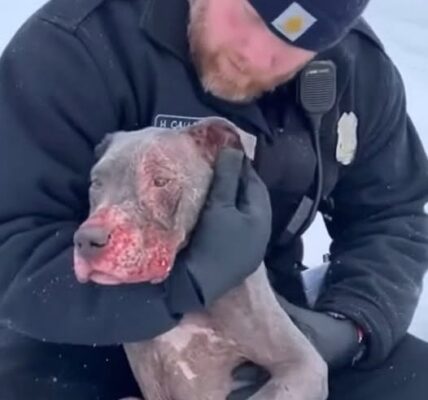
I’ve been a cop for over a decade, and most night calls blur together. But one 3 a.m. “suspicious person” call changed everything I thought I knew about my life.
I was adopted as a child after years in foster care. My records were sealed and incomplete, and every attempt to learn about my biological family led nowhere. I grew up loved by my adoptive parents, but the unanswered questions never fully went away.
That night, I found an elderly woman barefoot under a streetlamp, shivering in a nightgown. When my lights hit her, she flinched and whispered, “Please don’t take me.” I sat with her, wrapped her in my jacket, and listened as she talked about a lost home, a baby she couldn’t protect—and a name she kept repeating: “Cal.”
Paramedics arrived, and her daughter came running. As they led the woman away, she looked back at me and said clearly, “Don’t leave him. Not again.”
Hours later, her daughter showed up at my door with a shoebox of records the state had mistakenly sent her. Inside was a hospital intake form from my birth year: mother’s name Evelyn. Infant name: Caleb. Letters addressed to a son who was never supposed to disappear.
DNA tests confirmed it. She was my sister. Evelyn was my mother.
When I visited Evelyn, her dementia lifted just enough for her to recognize me. She cried, hummed the same tune I’d carried in my memory my whole life, and finally let go of the guilt she’d lived with for decades.
Now, when I answer “suspicious person” calls, I remember that sometimes it isn’t danger under the streetlight—sometimes it’s a life coming apart, or quietly finding its way home.